Showing posts with label Saniyya Sidney. Show all posts

Sunday, March 12, 2017

Video review: "Fences"


I was reading one of those articles before the Oscars where a voting member anonymously reveals their ballot, and they were quoted as saying they didn’t put a lot of stock in “Fences” because “they just shot the play.”

Cow patties.

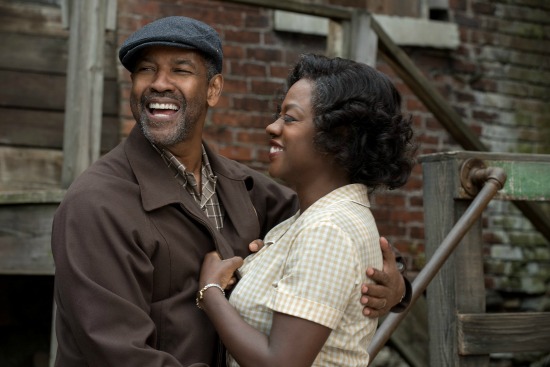
The reason “Fences” was one of the best films of 2016 was not just because of the excellence of the writing, for which August Wilson adapted his own play. Denzel Washington, Viola Davis and the rest of the excellent cast made those characters leap off the screen and into our hearts.

And Washington, stepping behind the camera to direct a film for just the second time, employed a host of camera and editing tools to make us feel like we were in the middle of the story, rather than squinting from the back row.

Part of Wilson’s “Pittsburgh Cycle,” the story examines a blue-collar black family in the 1950s. Troy Maxson (Washington) is an aging cock of the walk, a former Negro League baseball player and thief who went straight to become a family man. He’s a garbage collector who has just agitated to become the first black city employee who doesn’t just pick up the cans but drives the truck.

It tells you something that Troy demanded the opportunity, despite not knowing how to drive.

David plays his devoted wife, Rose (Davis). Their relationship is strong, but one based upon Troy’s dominance over every aspect of their lives -- especially how the treat their teenage son, Cory (Jovan Adepo). He’s a football star with the prospect of a college scholarship, but Troy’s own crushed sports dreams and the racial divide color his reaction.

The rest of the cast is also spectacular, including Stephen Henderson, Russell Hornsby and Mykelti Williamson playing Troy’s best friend, older son from another relationship and disabled brother, respectively.

Wilson and Washington have supposedly made plans to film the other nine plays in the Pittsburgh Cycle. If so, they’re off to a magnificent start.

Video features are a mite on the light side. The DVD contains none at all. The Blu-ray boasts six making-of featurettes: “Expanding the Audience: From Stage to Screen,” “The Company of Fences,” “Building Fences: Denzel Washington,” “Playing the Part: Rose Maxson” and “August Wilson’s Hill District.”

Movie:


Extras: 


Friday, December 23, 2016

Review: "Fences"


In general I’m not a fan of most stage-to-screen adaptations. The mediums are lot more different than people think, and the stitch marks show too glaringly from the conversion process. Like the way the action is largely confined to one or two places, the cast is artificially small, and people have that weird habit of walking a few steps away, but the other characters continue the conversation as if they can’t be heard.

But “Fences,” directed and starring Denzel Washington from a screenplay adaptation that August Wilson did himself, is an absolute triumph. It’s a deeply affecting portrait of African-American lives in 1950s Pittsburgh, with the patriarch of a small family raging against injustice and the life that has left him feeling shackled.

Part of Wilson’s “Pittsburgh Cycle,” “Fences” is the first in what Washington has declared will be screen versions of all 10 plays. If the first is any indication, we’re about to see one of the most ambitious undertakings in cinematic history.

Certainly, “Fences” belongs on any list of the best films of 2016.

The story takes place mostly in the kitchen and cramped back yard of Troy and Rose Maxson. He’s a garbage man and she’s a housewife, living in a tidy but poor section of Pittsburgh. They’ve been married 18 years and have a son in high school, Cory (an impressive Jovan Adepo), who is a star player on the football team and has an offer to play on a scholarship in college.

Troy, though, is both a product and a rebel of his time. He had a wild youth, living as a thief and fathering another boy, Lyons (Russell Hornsby), by another woman. He gave it all up long ago to be a garbage collector, because it was a safe and stable existence. But now he’s agitating for a promotion to driver of the garbage truck, something no other “coloreds” are allowed to do.

Troy was also a star baseball player prior to integration of the sport at the professional level, and doesn’t want to see Cory go through the same disappointment that he did. The fierce nature of his love unfortunately translates into ogreish behavior that pushes the boy away, and starts a growing rift with Rose.

Over the course of the story, Troy works (in fits and starts) on building a fence in his back yard, for reasons that are apparent only to himself. I suspect it’s because Troy is a man who has a firm grasp on his own identity, and knows what things he wants to keep in his life and what he wants to keep out. His tragic flaw is the delusion that he has control over these things.

Most of the rest of the cast are carryovers from the recent Broadway stage revival. Stephen Henderson is a revelation as Bono, Troy’s coworker and best friend. Henderson takes would could have been a typical wingman role and gives Bono all sorts of depths and shades. He loves Troy and Rose, so much that he can’t stand when they begin to tear each other up. Bono is endlessly supportive but not an enabler.

Rounding out the cast is Mykelti Williamson as Gabriel, Troy’s younger brother who was left mentally shattered after being wounded during World War II. As the story opens, Gabriel has been living with Troy and Rose -- indeed, his disability checks helped buy the house -- but recently moved out to his own place. Carrying a trumpet he can’t play and a tattered vestige of his manhood, Gabriel is a pitiable symbol.

“Fences” sticks close to the play in terms of character, story and dialogue. Washington employs some subtle but effective director’s tricks to open things up, such as having the camera slowly rotate around a small knot of people having a conversation.

Washington and Davis both give powerful, Oscar-worthy turns, and the supporting cast hits all its notes squarely and true. This is the rare stage play that only grows in impact when it’s given a little more room to flourish.