Showing posts with label Viola Davis. Show all posts

Thursday, April 22, 2021

Fearless Oscar predictions 2021


Will this be the lowest-rated Oscars telecast ever? Frankly, I don't care if it is.

Hurrah to the studios and filmmakers who still put their movies out in 2020 despite pandemic and shutdown and death and mayhem. Raspberries to those who fled the scene, endangering the entire industry because they didn't want to take a write-down on their flicks.

We needed the movies more than ever last year, not just as an escape or entertainment but to put a mirror up to our collective faces and stare at the blemishes there. Not everyone liked what they saw, nor should they.

So the Academy Awards nominees for last year are bereft of the big-budget blockbusters, superhero flicks, fast cars and slick spies, CGI showpieces and other high-profile flicks we're used to. But those movies also tend not to contend for the Oscars other than in some of the technical categories, so it won't really have much impact on who wins.

But it's likely that TV audiences won't tune in because their favorites aren't represented. Overall I think the quality of films up for contention is about what we'd see in a typical year, or at most a half-step below. 

For those who love cinema, there was plenty to celebrate. As is often the case, my favorite films -- "Ma Rainey's Black Bottom," "Mank," "Wolfwalkers" and "Emma" were my first ranked four -- have not fared very well during the awards season. My fifth, "Nomadland," seems poised for a good showing, including an odds-on favorite to win Best Picture. I'll take it.

So let's get to my annual picks and predictions for the Oscars. As always, I provide my prediction of who will win, and my pick of who I think should win. And, in an act of pure puckishness, I cross out the names of some nominees who I deem undeserving and replace them with better candidates -- the dreaded "Chris Cross."

Best Picture


The Nominees: 
The Father
Judas and the Black Messiah
Mank
Minari
Nomadland
Promising Young Woman
Sound of Metal
The Trial of the Chicago 7

The Chatter: "Nomadland" has led the way for most of the awards season, and for good reason. It's a film of immense stillness and confidence, with another quietly spectacular performance for Frances McDormand. The title of filmdom's "greatest living actor" is unofficial and arbitrary, but for my money the mantle has passed from Meryl Streep to her.

Writer/director Chloé Zhao, in just her third feature film, has reached the heights of Hollywood filmmaking, and seems poised for a long and fruitful career. 

"Mank," an early favorite, has fallen badly, dismissed as stodgy old-school Hollywood filmmaking. (I'm stodgy and old-school, so I loved it.) "Promising Young Woman" has made a late charge, and though I'm not a fan of the movie I respect its audacity and originality. It appears to be the main stalking horse.

"Judas and the Black Messiah" has a chance as the film that best represented unrest about racial injustice happening around us. But I wouldn't be surprised if "The Trial of the Chicago 7" sneaks in. It's an "actor's movie," and they make up the biggest voting branch.

Prediction: "Nomadland"

Pick: "Mank"

Chris Cross: Nothing on the list of nominees I disliked, though I'll take "Emma," "Ma Rainey's Black Bottom" and "The Personal History of David Copperfield" over "Minari," "Sound of Metal" or "Woman."

Best Actress


The Nominees: 
Viola Davis, "Ma Rainey's Black Bottom"
Andra Day, "The United States vs. Billie Holiday"
Vanessa Kirby, "Pieces of a Woman"
Frances McDormand, "Nomadland"
Carey Mulligan, "Promising Young Woman"

The Chatter:  This has been the hottest race of the awards season, with McDormand, Davis and Mulligan trading blows during the preliminary award contest. Davis won at the Screen Actors Guild Awards, so I think she's going to overtake McDormand, one past Oscar winner against another. The Oscars often give Best Actress to a film that wasn't even nominated for Best Picture, so there's much precedent for a Davis win. Mulligan will have her day.

Prediction: Davis

Pick: McDormand

Chris Cross: Let's kick Kirby to the curb in place of the captivating Anya Taylor-Joy from "Emma."

Best Actor


The Nominees: 
Riz Ahmed, "Sound of Metal"
Chadwick Boseman, "Ma Rainey's Black Bottom"
Anthony Hopkins, "The Father"
Gary Oldman, "Mank"
Steven Yeun, "Minari"

The Chatter: Fairly weak field this year. Boseman appears to be the sentimental favorite, and it's the Academy's last chance to honor the late icon. Wisely, they chose not to do it for the awful "Da 5 Bloods."

Hopkins and Oldman are past winners collecting more laurels just by being nominated. I thought Yeun was rather flat in a movie where the female characters outshone him. Ahmed was terrific in a tiny movie few people saw; as they say, "the nomination is his award."

Prediction: Boseman

Pick: Oldman

Chris Cross: I'll once again defend the much-ridiculed "The Call of the Wild" because it has one of Harrison Ford's best performances. Really. Go check it out, the CGI dog isn't as bad as they say. Goodbye, Yeun.

Best Supporting Actress


The Nominees: 
Maria Bakalova, "Borat Subsequent Moviefilm"
Glenn Close, "Hillbilly Elegy"
Olivia Colman, "The Father"
Amanda Seyfried, "Mank"
Yuh-Jung Youn, "Minari"

The Chatter: Really solid list, apart of the head-scratcher of Bakalova for the barely-watchable "Borat" sequel. Close, nominated a million times without winning, has a shot but Youn would see to be the favorite in a battle of the grandmas. I was very happy to see Seyfried make the list in a career-changing performance. Colman wowed me way more in "The Father" than she did for her best actress win (really a supporting) for "The Favourite."

Prediction: Youn

Pick: Close

Chris Cross: Nix to Bakalova and yay to Lily Collins in "Mank."


Best Supporting Actor


The Nominees: 
Sacha Baron Cohen, The Trial of the Chicago 7
Daniel Kaluuya, Judas and the Black Messiah
Leslie Odom, Jr., One Night in Miami
Paul Raci, Sound of Metal
LaKeith Stanfield, Judas and the Black Messiah

The Chatter: Typically one of the most competitive categories, rather limp this year. On the one hand, I'm thrilled that LaKeith Stanfield, one my favorite young film actors, got his first Oscar nomination. On the other, it's in the supporting category even though he's clearly the lead of "Judas." Worst, he'll compete against co-star Daniel Kaluuya, who appears poised to win. I can't even pick him because it's such an egregious example of category-hopping.

Sacha Baron Cohen was fine in a movie that's basically just a series of characters delivering speeches to each other. Raci is a strange pick, an unknown actor in a not particularly interesting role. Strange we're not hearing pushback about the two hearing actor playing deaf characters both getting nominated. Odom was fine but I thought Kingsley Ben-Adir as Malcolm X was the standout of "Miami."

Prediction: Kaluuya

Pick: Kaluuya

Chris Cross: Can't hear you Raci, talk less Cohen, wrong guy Odom. Instead let's invite Caleb Landry Jones from "The Outpost," Ben-Adir and Peter Capaldi for "The Personal History of David Copperfield."


Best Original Screenplay


The Nominees: 
"Judas and the Black Messiah," Will Berson, Shaka King, Keith Lucas & Kenny Lucas
"Minari," Lee Isaac Chung
"Promising Young Woman," Emerald Fennell
"Sound of Metal," Derek Cianfrance, Abraham Marder & Darius Marder
"The Trial of the Chicago 7," Aaron Sorkin

The Chatter: I would bet Fennell will win here, because the Academy loves to dole out screenwriting awards as consolation prizes or encouragement for up-and-coming filmmakers. 

I still can't believe David Fincher's "Mank," based on a screenplay written 20 years earlier by his deceased dad, Jack, was ignored. I guess screenwriters really don't get any credit.   

Prediction: "Promising Young Woman"

Pick: "Judas and the Black Messiah"

Chris Cross: I'll replace "Trial" with "Emma" and "Woman" with "The Personal History of David Copperfield," two lovely, vibrant adaptations of musty old British novels. Plus "Mank" for "Minari."

Best Adapted Screenplay


The Nominees: 
"Borat Subsequent Moviefilm," Peter Baynham, Sacha Baron Cohen, Jena Friedman, Anthony Hines, Lee Kern, Dan Mazer, Erica Rivinoja & Dan Swimer
"The Father," Christopher Hampton & Florian Zeller
"Nomadland," Chloé Zhao
"One Night in Miami," Kemp Powers
"The White Tiger," Ramin Bahrani


The Chatter: What the hell is up with the Borat love? It was so long and so not funny. Plus it has too many screenwriters to be taken seriously. But it tweaked the right politicians, so I guess it's golden.

Ironically, "Nomadland" is the favorite even though it seems like such an original, distinctive vision. Chloé Zhao came up with a fantastic character from a nonfiction book about modern nomads. The only other film that has a shot is "One Night in Miami."

Prediction: "Nomadland"

Pick: "Nomadland"

Chris Cross: Kaput, "Borat." Hooray, "The Outpost."

Best Director


The Nominees: 
Thomas Vinterberg, "Another Round"
Emerald Fennell, "Promising Young Woman"
David Fincher, "Mank"
Lee Isaac Chung, "Minari"
Chloé Zhao, "Nomadland"


The Chatter: Zhao looks to be as close to a lock as any contest this year, and deservedly so. A lot of people were surprised by Vinterberg making it onto the list, including me.

Prediction: Chloé Zhao

Pick: Chloé Zhao

Chris Cross: I'll keep Fincher and Zhao and say goodbye to the rest. Instead let's laud George C. Wolfe for "Ma Rainey," Autumn de Wilde for "Emma" and Regina King for "One Night in Miami."

Best Documentary Feature


The Nominees: 
Collective
Crip Camp
The Mole Agent
My Octopus Teacher
Time

The Chatter: A strong year for docs but oddly none of my favorites, such as "Desert One," made the list. "Collective" was by far the best of this bunch.

 Prediction: "Collective"

Pick: "Collective"

Chris Cross: I'll take "The Painter and the Thief" and "Desert One" over "Time" and "The Mole Agent," which was pleasant but is basically a documentary about making this documentary.


Best Documentary Short


The Nominees: 
Colette
A Concerto Is a Conversation
Do Not Split
Hunger Ward
A Love Song for Latasha


The Chatter: Alas, I did not get to see any of the doc shorts this year, just ran out of time. 

Prediction: “A Love Song for Latasha”


Best Animated Feature


The Nominees: 
Onward
Over the Moon
A Shaun the Sheep Movie: Farmageddon
Soul
Wolfwalkers


The Chatter: We may be getting close to thinking about putting this category out of its misery. Instead of eliciting a wave of terrific animation, it's led to a lot of perfectly serviceable movies getting Oscar nominations. The Disney/Pixar film usually wins, though the Irish-produced "Wolfwalkers" is vastly superior.

Prediction: “Soul”

Pick: "Wolfwalkers"

Chris Cross: "Onward" and "Shaun the Sheep" don't deserve to be here, but I don't have anything to replace them with.


Best Animated Short


The Nominees: 
Burrow
Genius Loci
If Anything Happens I Love You
Opera
Yes-People

The Chatter: Disney/Pixar always wins... but there isn't one this year!
 
Prediction: "If Anything Happens I Love You"

Pick: "If Anything Happens I Love You"


Best Live Action Short


The Nominees: 
Feeling Through
The Letter Room
The Present
Two Distant Strangers
White Eye

The Chatter: TERRIFIC slate of shorts this year.

Prediction: "Two Distant Strangers"  

Pick: "Two Distant Strangers"  


Best Foreign Language Film


The Nominees: 
Another Round
Better Days
Collective
The Man Who Sold His Skin
Quo Vadis, Aida?

The Chatter: I didn't see enough of these, but "Collective" was terrific. Since "Another Round" also scored a director nomination, it would seem to have an edge.

Prediction: "Another Round"

Pick: "Collective"


Best Cinematography

The Nominees: 
Judas and the Black Messiah
Mank
News of the World
Nomadland
The Trial of the Chicago 7


Prediction: "Mank"

Pick: "Nomadland"


Best Film Editing


The Nominees: 
The Father
Nomadland
Promising Young Woman
Sound of Metal
The Trial of the Chicago 7


Prediction: "Sound of Metal"

Pick: “The Father”


Best Sound


The Nominees: 
Greyhound
Mank
News of the World
Sound of Metal
Soul

The Chatter: The Academy has combined the categories of Sound Editing and Sound Mixing into a single award, mostly to avoid confusion because nobody really understood the difference, even the Academy voters. It makes sense although the two are really entirely different crafts done by separate teams. Obviously the movie all about aural loss and dissonance is the standout.

Prediction: "Sound of Metal"

Pick: "Sound of Metal"

Best Production Design


The Nominees: 
The Father
Ma Rainey's Black Bottom
Mank
News of the World
Tenet

Prediction: “Mank"

Pick: “Mank"

Best Original Score


The Nominees: 
Da 5 Bloods
Mank
Minari
News of the World
Soul

Prediction: “Soul”

Pick: “Soul”


Best Song


The Nominees: 
“Husavik” from Eurovision Song Contest: The Story of Fire Saga
“Fight For You” from Judas and the Black Messiah
“lo Sì (Seen)” from The Life Ahead (La Vita Davanti a Se)
“Speak Now” from One Night in Miami
“Hear My Voice” from The Trial of the Chicago 7

Prediction: “Speak Now”

Pick: “Husavik”


Best Makeup and Hair


The Nominees: 
Emma
Hillbilly Elegy
Ma Rainey’s Black Bottom
Mank
Pinocchio

Prediction: "Ma Rainey"

Pick: "Ma Rainey"


Best Costume Design


The Nominees: 
Emma
Mank
Ma Rainey's Black Bottom
Mulan
Pinocchio

Prediction: "Ma Rainey"

Pick: "Emma"


Best Visual Effects


The Nominees: 
Love and Monsters
The Midnight Sky
Mulan
The One and Only Ivan
Tenet

The Chatter: God help us, "Tenet" is going to win more Oscars than "Mank."

Prediction: "Tenet"

Pick: “The Midnight Sky”

Wednesday, January 15, 2020

Review: "Troop Zero"


“Y’all will find life gets much easier if you don’t want so much.”
                    --Principal Massey

As a sucker for warmhearted, Southern-fried dramedies I wanted to like “Troop Zero” a lot more than I did.

It practically vibrates with authenticity, capturing life in 1977 Georgia in the fictional hamlet of Wiggly. It’s the sort of homespun place with one restaurant, Butte’s Chicken, where everybody knows everybody and nobody much has any money. Blacks and whites lived side-by-side long before integration because nobody here can understand that sort of foolishness and, again, there isn’t enough coin to have two of everything.

The bored librarian wears neon-blue eye shadow, children are pretty well left to their own devices and the town lawyer is a jolly cracker who can’t find his pants and keeps a toothbrush tucked behind one ear.

That would be Boss Man, daddy to the Boss, aka Christmas Flint, played by McKenna Grace. She was terrific in “Gifted” from a couple years ago playing a young genius, and here she’s playing a girl who’s not especially bright and a whole lot awkward.

Christmas lost her mom a year ago and is like a leftover puzzle piece, trying to figure out where she fits in the world.

She spends her evenings staring up at the stars, yearning to connect with life from outer space. On Earth, things are pretty glum, but Christmas has naïve innocence about her, all pigtails and goofy smiles.

Boss Man (Jim Gaffigan) is on the phone a lot or away helping clients who tend not to pay him, so Miss Rayleen (Viola Davis) ends up as her de facto guardian. She’s her dad’s secretary, but once harbored ambitions of her own toward going to law school and getting out of Wiggly.

Rayleen has a stern way about her, smoking and cussing, but we suspect there’s a lot of heart underneath. Mike Epps is Dwayne, the good-hearted neighbor/buddy/ex-con.

The story (screenplay by Lucy Alibar) gets kicked off by a visiting NASA scientist who is recording voices on a Golden Record that will be sent into space via satellite. The winners of the regional Birdie (think Girl) Scouts talent competition will get to be one of the voices, and obviously since Christmas is an alien nut it immediately becomes her quest.

This means getting past the school principal, “Nasty” Miss Massey (Allison Janney), who also doubles as the troop mother of the local Birdie troop, led by certified mean girl Piper (Ashley Brooke). So Christmas and Rayleen set about recruiting the dreggiest of dregs from the local kid populace. They include:
  • “Hell-No” Price (Milan Ray), the local bully who believes firmly in collecting “taxes” from other students.
  • Joseph (Charlie Shotwell), Christmas’ only true friend, who’s drawn more to musicals and costumes than football, and thus is nearly as much an outcast as her.
  • Smash (Johanna Colón), who likes to do what her name implies and, as Christmas narrates, “is like the universe -- full of gas and mystery.”
  • Anne-Claire (Bella Higginbotham), a wallflower who asks Jesus to help her decide everything, and wears a huge bandage on half of her glasses because of a missing eye.
Things fall into a fairly typical scrappy-underdogs-surprise-everyone type of plot, as Miss Massey and her troop of nasties throw up obstacles, while Troop Zero -- which they’re labeled because there are “no numbers left” -- overcome adversity and form unlikely friendships.

The movie is directed by director duo Amber Finlayson and Katie Ellwood (who go by Bert & Bertie, in an apparent bid to unseat McG for the title of Silliest Filmmaker Nickname). They seem to have the heart for this material but not a good notion what to do with it.

The kids’ interactions, which are the center of the movie, are a bit stilted and contrived. Davis and Janney are their usual magnificent selves, but the Oscar winners have one-note characters to work with.

“Troop Zero” is a little bit “To Kill a Mockingbird,” a little bit “Meatballs,” and not a little “Fried Green Tomatoes.” I love the ingredients but didn’t fall in love with the way they were put together. It needed some more time in the deep fryer to finish cooking through.


Sunday, March 12, 2017

Video review: "Fences"


I was reading one of those articles before the Oscars where a voting member anonymously reveals their ballot, and they were quoted as saying they didn’t put a lot of stock in “Fences” because “they just shot the play.”

Cow patties.

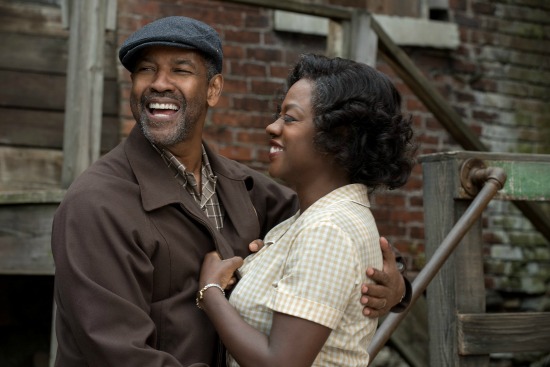
The reason “Fences” was one of the best films of 2016 was not just because of the excellence of the writing, for which August Wilson adapted his own play. Denzel Washington, Viola Davis and the rest of the excellent cast made those characters leap off the screen and into our hearts.

And Washington, stepping behind the camera to direct a film for just the second time, employed a host of camera and editing tools to make us feel like we were in the middle of the story, rather than squinting from the back row.

Part of Wilson’s “Pittsburgh Cycle,” the story examines a blue-collar black family in the 1950s. Troy Maxson (Washington) is an aging cock of the walk, a former Negro League baseball player and thief who went straight to become a family man. He’s a garbage collector who has just agitated to become the first black city employee who doesn’t just pick up the cans but drives the truck.

It tells you something that Troy demanded the opportunity, despite not knowing how to drive.

David plays his devoted wife, Rose (Davis). Their relationship is strong, but one based upon Troy’s dominance over every aspect of their lives -- especially how the treat their teenage son, Cory (Jovan Adepo). He’s a football star with the prospect of a college scholarship, but Troy’s own crushed sports dreams and the racial divide color his reaction.

The rest of the cast is also spectacular, including Stephen Henderson, Russell Hornsby and Mykelti Williamson playing Troy’s best friend, older son from another relationship and disabled brother, respectively.

Wilson and Washington have supposedly made plans to film the other nine plays in the Pittsburgh Cycle. If so, they’re off to a magnificent start.

Video features are a mite on the light side. The DVD contains none at all. The Blu-ray boasts six making-of featurettes: “Expanding the Audience: From Stage to Screen,” “The Company of Fences,” “Building Fences: Denzel Washington,” “Playing the Part: Rose Maxson” and “August Wilson’s Hill District.”

Movie:


Extras: 


Friday, December 23, 2016

Review: "Fences"


In general I’m not a fan of most stage-to-screen adaptations. The mediums are lot more different than people think, and the stitch marks show too glaringly from the conversion process. Like the way the action is largely confined to one or two places, the cast is artificially small, and people have that weird habit of walking a few steps away, but the other characters continue the conversation as if they can’t be heard.

But “Fences,” directed and starring Denzel Washington from a screenplay adaptation that August Wilson did himself, is an absolute triumph. It’s a deeply affecting portrait of African-American lives in 1950s Pittsburgh, with the patriarch of a small family raging against injustice and the life that has left him feeling shackled.

Part of Wilson’s “Pittsburgh Cycle,” “Fences” is the first in what Washington has declared will be screen versions of all 10 plays. If the first is any indication, we’re about to see one of the most ambitious undertakings in cinematic history.

Certainly, “Fences” belongs on any list of the best films of 2016.

The story takes place mostly in the kitchen and cramped back yard of Troy and Rose Maxson. He’s a garbage man and she’s a housewife, living in a tidy but poor section of Pittsburgh. They’ve been married 18 years and have a son in high school, Cory (an impressive Jovan Adepo), who is a star player on the football team and has an offer to play on a scholarship in college.

Troy, though, is both a product and a rebel of his time. He had a wild youth, living as a thief and fathering another boy, Lyons (Russell Hornsby), by another woman. He gave it all up long ago to be a garbage collector, because it was a safe and stable existence. But now he’s agitating for a promotion to driver of the garbage truck, something no other “coloreds” are allowed to do.

Troy was also a star baseball player prior to integration of the sport at the professional level, and doesn’t want to see Cory go through the same disappointment that he did. The fierce nature of his love unfortunately translates into ogreish behavior that pushes the boy away, and starts a growing rift with Rose.

Over the course of the story, Troy works (in fits and starts) on building a fence in his back yard, for reasons that are apparent only to himself. I suspect it’s because Troy is a man who has a firm grasp on his own identity, and knows what things he wants to keep in his life and what he wants to keep out. His tragic flaw is the delusion that he has control over these things.

Most of the rest of the cast are carryovers from the recent Broadway stage revival. Stephen Henderson is a revelation as Bono, Troy’s coworker and best friend. Henderson takes would could have been a typical wingman role and gives Bono all sorts of depths and shades. He loves Troy and Rose, so much that he can’t stand when they begin to tear each other up. Bono is endlessly supportive but not an enabler.

Rounding out the cast is Mykelti Williamson as Gabriel, Troy’s younger brother who was left mentally shattered after being wounded during World War II. As the story opens, Gabriel has been living with Troy and Rose -- indeed, his disability checks helped buy the house -- but recently moved out to his own place. Carrying a trumpet he can’t play and a tattered vestige of his manhood, Gabriel is a pitiable symbol.

“Fences” sticks close to the play in terms of character, story and dialogue. Washington employs some subtle but effective director’s tricks to open things up, such as having the camera slowly rotate around a small knot of people having a conversation.

Washington and Davis both give powerful, Oscar-worthy turns, and the supporting cast hits all its notes squarely and true. This is the rare stage play that only grows in impact when it’s given a little more room to flourish.


Sunday, December 11, 2016

Video review: "Suicide Squad"


People seem to want to have an instant relationship with movies these days. Large swaths of the moviegoing public had judged the “Ghostbusters” reboot long before it came to theaters. Folks fell in love with the new “Stars Wars” sequel in a similar fashion, seeing it as the antidote to the unfairly maligned prequels.

After the Sturm und Drang of the lackluster “Batman v Superman,” I think many were not willing to judge its follow-up, “Suicide Squad,” with an open heart. And while the movie’s certainly got some problems, especially in the first half, it’s actually a notable variation on the gradually tiring superhero genre.

Instead of all-powerful do-gooders racked with guilt over their abilities, we are given a half-dozen flawed villains who are given a chance to get out of prison to work for the government. It seems there’s some sort of energy vortex in the middle of the city that could destroy the world, so our gang of creeps is sent in to take care of it.

The A-listers are Will Smith and Margot Robbie as Deadshot and Harley Quinn, respectively. He’s an ace assassin who never misses, while she’s a former psychiatrist who turned into a deranged go-go girl under the influence of her even crazier boyfriend, the Joker (Jared Leto). Alas, if you’ve watched the trailers for “Suicide Squad” you’ve already seen a good chunk of Leto’s entire role. The Joker’s not the main bad guy, just a colorful backgrounder here.

I’m not even going to list the others, because there’s too many of them, plus other secondary figures. Suffice to say they’re a pleasing multicultural mix of killers and psychopaths.

Things take too long in the first half, with quick riffs on each character to introduce them. But it all builds up nicely to a carefully choreographed orgy of mayhem and CGI special effects.

“Suicide Squad” may not be a great super hero/villain flick, but it’s more entertaining and fun than snap judgments might suggest. Sometimes you have to just wait a little bit and let the movie come to you.

The lynchpin of the bonus features is an extended cut that adds 13 minutes of previously unseen footage. You can also watched synchronized pop-up content related to each scene using the VUDU app.

Other extras include seven making-of featurettes and a gag reel.

Movie:


Extras:


Thursday, August 4, 2016

Review: "Suicide Squad"


If “Batman v Superman” was a hot mess, then its DC Comics companion, “Suicide Squad” is an even hotter mess -- but also a more enjoyable one.

It’s essentially a “Dirty Dozen” spin on the superhero genre, taking a disparate gaggle of bad guys out of the clink and throwing them into a squad of supposed do-gooders. They fight with each other and rebel against their overlords, and eventually get around to doing some good.

The movie takes waaaaay too long during the “putting together the team” portion of the movie, but it pays off with a second half that is virtually non-stop action and CGI-heavy mayhem. Our gang of misfits actually transforms from sneering baddies into those in whose hands the fate of the very world rests.

(Have you noticed that all superhero movies lately are about the end of the world? That ol’ Earth sure is a vulnerable planetoid.)

The best bet writer/director David Ayer (“End of Watch”) makes is not trying to spread around the screen time and backstory evenly. It’s a first-among-equals approach, with Will Smith’s Deadshot and Margot Robbie’s Harley Quinn as the main characters. Everyone else is essentially an add-on.

Deadshot is a merciless assassin who never misses with a firearm, but has a soft spot in the shape of his beloved 11-year-old daughter. He’s a “serial killer who takes credit cards,” so if fighting for the U.S. government is the price he has to pay to be reunited with her, then so be it. Viola Davis is commanding and ice-blooded as Amanda Walker, the intelligence chief running the show.

I should mention all the squad members have an explosive device implanted in their spine, and if they disobey the hardcase leader of their unit, Rick Flag (Joel Kinnaman), they get blown up.

Harley Quinn is written as a scene-stealer, and Robbie milks it for everything she’s got. Harley is a former psychiatrist who got turned bad by her jailbird boyfriend (more on him in a minute), and is now a flirty, sexy, homicidal maniac. Her superhero costume consists of barely-there shorts, cutoff shirt, smeared makeup and fishnets. Her favorite M.O. is to bash people in the face with a baseball bat.

It’s a crazy, off-kilter character, a woman who uses her sexuality as a weapon and a tool. She’s somewhere between a feminist nightmare and empowerment icon.

Her guy is the Joker, played in this iteration by Jared Leto, utterly horrifying in bright green hair, facial tattoos and apparently stainless steel teeth. If Harley’s unhinged, he’s the claw hammer that pulled her screws loose. Jack Nicholson’s J-man was murderously theatrical and Heath Ledger’s was crazily calculating; Leto’s is just crazy for the sake of crazy.

For a while we think the movie’s building Joker up as the main villain. But it turns out he’s basically just a street gangster, not a world-beater.

The rest of the team, in quick order, is: Boomerang (Jai Courtney), an Aussie blade master who’s got a lot of ‘tude; El Diablo (Jay Hernandez), a South-Central gangbanger who can produce ferocious flames from his hands, but has made a vow of pacifism after personal loss; Killer Croc (Adewale Akinnuoye-Abgaje), a misanthropic lizard dude with super strength and reptilian skin; Slipknot (Adam Beach), a Native American warrior and mystery man; and Katana (Karen Fukuhara), a Japanese swordswoman whose blade steals the souls of her enemies.

Certainly the most visually interesting is Enchantress (Cara Delevingne), a dark sorceress who has actually possessed the body of a goody-goody archaeologist. She becomes a ghost-like apparition, seemingly made out of smoke and ash, with baleful eyes glowing out at us.

(At one point Delevingne breaks out into an odd, snake-y, vaguely Egyptian dance move. I kept wondering, “Is this supposed to be… scary? Because it’s actually kinda making me laugh.)

No one is going to confuse “Suicide Squad” with great moviemaking. It’s carelessly plotted and has too many hanger-on characters. But I can genuinely say I was entertained during long stretches, especially in the second hour.

Look at it this way: if the first DC Comics movie wasn’t any good, and this one is half a good movie, maybe the next one can get all the way to super.


Thursday, January 15, 2015

Review: "Blackhat"


Michael Mann is a sumptuous visual stylist ("Heat," "Manhunter") who sometimes has trouble with the ABCs of storytelling. Case in point: "Blackhat," a cyber thriller set mostly in China and Indonesia that wavers between confusion and utter incoherence.

When you're not struggling to comprehend dialogue uttered by non-native English speakers, you'll find yourself trying to remember all the various plot threads and centers of power at play. This movie is a double-dip into ponderous bewilderment.

Chris Hemsworth plays Nicholas Hathaway, a hacker doing 15 years' hard time in prison for past antics. And right now I know you're thinking to yourself, "Chris Hemsworth? The blond dude who plays Thor? Looks like a surfer on steroids? Not exactly what I picture a computer nerd looking like."

And it's true, Hemsworth is believable neither as a guy hunched over a laptop typing code out at a furious pace, nor as a toughened inmate with killer hand-to-hand combat skills who somehow manages to maintain salon-quality hair and a torso completely waxed of man fur. That prison must have a helluva commissary.

Anyway, the story (screenplay by Morgan Davis Foehl) starts with a cyber attack on a Chinese nuclear reactor resulting in an explosion and near meltdown. This is illustrated by a long, tedious CG animation sequence taking us deep into the inner recesses of a computer chip, which resembles the labyrinthine goblin tunnels of "The Lord of the Rings."

The Chinese and American governments reluctantly agree to team up -- or "liaise," as they call it, which sounds dirtier than it is -- and decide that Hathaway is the only guy in the world who can  break the code of the mysterious villain, or blackhat. He's recruited by Chen Dawai (Leehom Wang), a captain in the Chinese anti-hacking agency who also happened to be Hathaway's college roommate.

It seems that back when they were young and foolish the pair wrote the RAT program -- remote access tool -- that the blackhat has incorporated into his stratagem. So they feel a sort of obligation to bring him in. Plus, Hathaway gets sprung from jail if they're successful.

Tagging along, for reasons that are never made entirely clear, is Chen's kid sister, Lien (Wei Tang), who soon falls madly in love with Hathaway, adding an extra wrinkle to his dilemma: if he doesn't catch the bad guy, he goes back to prison and their romance dies.

Viola Davis has a solid turn as Barrett, the FBI agent assigned to the case, who knows when to lead the dog and when to give him slack. I also liked Holt McCallany as the gruff, stolid U.S. marshal; officially, he's there to make sure Hathaway doesn't escape but morphs into his defender.

Soon the intrepid group is flying to all sorts of locales, running down leads and getting into scrapes with henchmen. Hathaway proves to be an old-school combatant, preferring magazines strapped to his body and an improvised shiv instead of body armor and a gun. Kinda strange, considering they're able to procure a private jet, new computers and vehicles on the fly.

Occasionally "Blackhat" finds some genuinely tense moments, such as when Hathaway must hack into a super-secret NSA database to further their manhunt, or a couple of shootouts with jarring results. Here Mann reveals his chops as a filmmaker who instinctively understands the weight and flow of action scenes.

The rest of the time, though, it's an overlong head-scratcher that's pretty to look at but makes little sense.


Tuesday, December 17, 2013

Video review: "Prisoners"


I often harp on the fact that I think most movies today are too long. And “Prisoners” is not a short flick: just a hair over 2½ hours. But it’s one of the rare films I think is exactly as long as it needed to be. It’s also one of my favorite cinematic experiences of 2013.

This psychological drama/thriller is wound tighter than an alarm clock ready to go off. Hugh Jackman and Terrence Howard play fathers and best friends whose daughters mysteriously disappear on Thanksgiving Day. Dover (Jackman) goes on a one-man crusade to follow any leads, frequently stepping on the toes of Loki (Jake Gyllenhaal), the meticulous detective assigned to the case.

Suspicion quickly centers on Alex (Paul Dano), a mentally challenged man who drives an RV and barely talks. But the police have no evidence to link him to the kidnapping, so they let him go. When Dover takes matters into his own hands, it sets off a chain reaction of events with all sorts of tricky moral implications.

The characterizations are really deep and vivid, with even the supporting parts standing out. When you have performers the caliber of Viola Davis, Maria Bello and Melissa Leo in the cast, you know things are going to get interesting.

Director Denis Villeneuve (“Incendies”) and screenwriter Aaron Guzikowski give us one of the most ambitious films of the year, one that raises all sorts of head-scratching conundrums while resisting the urge to provide any easy answers. This is the sort of movie were parsing out the good guys from the bad is a difficult and ultimately pointless exercise.

Splendidly acted and well-told, “Prisoners” is one of the year’s best.

Video extras, which are the same for the DVD and Blu-ray editions, are sorely lacking. They both contain a pair of featurettes focusing on the story and performances, and that’s it.

Movie:


Extras:


Thursday, October 31, 2013

Review: "Ender's Game"


Give Hollywood credit for tackling a science fiction novel that contains few of the easy entry points the genre usually provides for cinematic endeavors. In "Ender's Game" there are no cute robot sidekicks, no cool aliens as allies, not even the lightspeed spaceships, laser weapons and other cool hardware that populate the background of such movies.

Instead, it's a grim and bleak look at a future where humanity is facing extinction at the hands of a hive-like race of creatures known as the Formics. Asa Butterfield plays Andrew "Ender" Wiggin, a young boy who is also a brilliant strategist, finding himself being trained to lead Earth's defense against the invaders.

(According to the film's narration, children make for better commanders because their ingenuity is not bogged down by straitlaced adult thinking. It's a storytelling conceit; just swallow it and move on.)

The film, based on the novel by Orson Scott Card, largely plays out as a long game of psychological warfare and simulated combat, with Ender attending the elite off-world Battle School, where he must go up against his fellow child recruits, his gruff and demanding commander, and eventually the aliens himself. He is forced to hone his instincts for warfare while balancing them against his human compassion, exemplified respectively by his psychopath brother and his compassionate sister (Abigail Breslin).

If you think just because the movie stars a cast of mostly kid actors that it's a good fit for young audiences, think again. While the violence is rather tame and there's no swearing, the mental duress placed upon Ender is quite extreme. Audience members under high school age would likely find it dreary.

(Incurious adults, too.)

As a cerebral exercise, though, I found the film challenging and complex, supplying many questions and few easy answers about the morality of waging war. Ender's tactics are genius, but his willingness to sacrifice allies to achieve a win earn him the grudging respect of his teachers and fellow students alike.
(I'm not surprised to learn the book is recommended reading for U.S. Marines officer training.)

As Colonel Graff, Harrison Ford tackles a much darker role than we're used to. Graff sees Ender as his shining star, potentially the savior of humanity, and if that means putting a tender boy through the crucible of harsh lessons, he's more than willing to do it. Viola Davis plays a psychiatrist chartered to nurture Ender's psyche, so naturally she finds herself butting heads with Graff.

Ben Kingsley has a small but vital role as the last of Ender's instructors, a man with a tatooed face and mysterious past. Hailee Steinfeld plays Petra, a fellow cadet who stands up for Ender when he's abused by their team leader.

"Ender's Game" will not suit everyone's tastes. Writer/director Gavin Hood's plotting is sometimes suspect, and the story bogs down a few times. And if you go in expecting a light, action-heavy ripping space yarn, you'll likely walk away disappointed. For me, the moral complexities of the tale were tantalizing and way more ambitious than expected. This is thinking man's sci-fi.


Thursday, September 19, 2013

Review: "Prisoners"


The most persistent criticism I have of movies today is length. Even most films I admire could be shortened a bit, and be the better for it. "Prisoners" is the rare exception of a long movie that earns its time; I didn't begrudge it any one of its 153 minutes.

This intricately-plotted psychological thriller is like a puzzle box that seems mystifying at first, but the deeper you go the clearer things come into focus. In the end all the little pieces mesh together perfectly.

The story of two kidnapped little girls and the two men trying desperately to find them -- one an angry, grieving father, the other an obsessive police detective -- "Prisoners" defies easy categorization. On the surface it wears the clothes of a crime procedural. But also it's about the conflict between these two characters.

Keller Dover (Hugh Jackman), the dad, is all gut instincts and faith. His emotions frequently get the better of him as time goes on and the chances of finding the girls alive plummet. Loki, the detective played by Jake Gyllenhaal, operates on logic and dogged determination. Early on we learn that he has never failed to solve a case, mainly because his life consists of little else but the hunt.

On an even deeper level, the film is a morality play, questioning whether extreme actions in the service of good can ever justify themselves. Keller becomes convinced that a simple-minded, nearly mute man named Alex (Paul Dano) has something to do with the disappearance of his daughter and another family's girl on Thanksgiving Day.

Alex's busted-up RV was spotted near where the girls went missing, and he initially ran from police. But they find no evidence to hold him, and Keller takes matters into his own hands. He enlists the aid of the other aggrieved father (Terrence Howard) in holding Alex hostage, which sets off a conflict between the two. There's a subtle rivalry between them: the well-off yuppie versus the blue-collar survivalist, the voice of civil reason against the "man's gotta do what a man's gotta do" individualist credo.

"He's not a person anymore," Keller insists. "He stopped being a person when he took our daughters."

Their wives react in equally different ways. Keller's spouse Grace (Maria Bello) essentially checks herself out, wallowing in pity and prescription sedatives. Nancy (Viola Davis) is front and center in the search, and then gets even more involved in a way that surprises.

Director Denis Villeneuve ("Incendies") and screenwriter Aaron Guzikowski explore their characters in subtle, probing ways. For instance, Loki's tattoos on his fingers and neck hint at a hard past, and a throwaway line of dialogue suggests he's an orphan. He's an idealist grown suspicious of traditional bastions of solidity, like the church or even the scales of justice for which he labors.

Keller's collection of religious crosses, weapons and emergency rations depict a man of outward confidence who inwardly lives in fear, leading us to believe at one point he may have had something to do with the kidnapping himself.

Other characters and story threads float around the fringes. There's the priest Loki investigates with a terrible secret that may or may not have something to do with this case. And Alex's protective aunt (Melissa Leo), who wants to protect her nephew but seems to intuitively understand Keller's rage at his impotence. Or the strange, sallow-faced man who shows up at a candlelight vigil.

Slowly, methodically, the cast and crew build this crime story into something much more, a dark and disturbing tale about the choices we make in duress. We're all prisoners of those decisions, for good or ill.


Thursday, September 27, 2012

Review: "Won't Back Down"


"Won't Back Down" is predictable but powerful, an inspirational drama based on a true story that, if it actually happened the way it's depicted in the movie, means that life is now unfolding in conventional three-act story arcs just like they teach in screenwriting programs.

This movie about two mothers, one of them a teacher, attempting to take over a failing school comes from the same studio that last year released the documentary "Waiting for Superman." The film, directed by Daniel Barnz from a script he co-wrote with Brin Hill, serves as a narrative feature counterpart to the same dilemma, about parents in rotten school districts looking for a way out for their kids. It's based on events that happened in California but is set in the inner-city school system of Pittsburgh.

Half of the heroine duo, Jamie Fitzpatrick (Maggie Gyllenhaal), is a walking hot mess of a person, a working-class woman who toils at two jobs but can't afford to send her dyslexic daughter Malia (Emily Alyn Lind) to private school. Jamie is one of those single moms barely holding it together, but she has spunk, determination and the ability to charm others.

It's a flashy part, and Gyllenhall milks it for every ounce.

More challenging is the subtler role of Nona Alberts (Viola Davis), a teacher who was once impassioned but is now barely keeping her class above water. Such is the abject morale at Adams Elementary that the teachers are ordered to falsify the attendance records to hide how many students skip class, for fear of losing their funding. It's no surprise that Adams has been labeled a "failing" school for 19 years in a row.

Davis has to show us a woman who's become part and parcel of a broken system, but finally has the guts to stand up and fight back. Of course, she's inspired by the poor educational progress of her own son. Davis displays layers of steely strength, fear and conviction a lesser performer might not.

The movie is careful not to portray teachers as the bad guys, though teacher unions fare less well. Holly Hunter plays a sympathetic local union president who's appalled by the bare-knuckle tactics employed by those around her -- one of whom openly states that they should start fighting for school children over teachers when the kids begin paying union dues.

"When did Norma Rae get to be the bad guy?" he laments, unironically.

It's an interesting point in our history, after unions in the early 20th century fought bravely to secure basic protections and rights that we take for granted today. Still, like many public institutions some groups got self-indulgent and greedy and turned into the entrenched system standing in the way of progress.

In "Won't Back Down," this translates as Malia's absolutely horrific teacher, who texts on her phone while the kids are bullying Malia, blithely protected by tenure.

Although it strives for some semblance of fairness, this sum total of this film's thrust is firmly on the side of those pushing for change. But I give it points for at least trying to see things from the level of the classroom, where overtaxed teachers strive to do some good and not constantly worry about losing their jobs.

Since this story is driven by strong female characters, Oscar Isaac has the thankless duty of playing the role of the love interest who gets swept up in his partner's cause. He's a young guy straight out of Teach for America who strums a ukulele in class and is beloved by absolutely everyone. He exists more as an ideal than a real character.

"Won't Back Down" is worth it for the powerhouse performances of Viola Davis and Maggie Gyllenhaal, and the rah-rah story with an undeniable emotional hook. I have to deduct a grade, though, for its embrace of reformist impulses through rigidly conformist storytelling methods.

3 stars out of four

Tuesday, March 27, 2012

Video Review: "Extremely Loud and Incredibly Close"


"Extremely Loud and Incredibly Close" is probably the most disrespected film ever nominated for a Best Picture Oscar.

This challenging drama was directed by high-toned director Stephen Daldry ("Billy Elliot," "The Reader") and adapted from Jonathan Safran Foer’s best-selling novel by screenwriter Eric Roth ("Forrest Gump"). Despite that prestigious pedigree, and the presence of major stars Tom Hanks and Sandra Bullock, "Loud" barely received a theatrical release. And reviews generally ranged from indifferent to openly hostile.

Me? I rushed it into the #3 slot on my Top 10 slot at the last minute.

Those lambasting the film seem to regard it as cynically manipulating the decade-old tragedy of 9/11, as a young boy searches the city of New York for clues to a game he played with his father, who died in the World Trade Center. I think these critics erroneously tried to force the label of "the definitive 9/11 movie" on the film, when really it's more a ruminative tale about a very specific, very unusual child.

As played with devastating effect by newcomer Thomas Horn, Oskar Schell is a brilliant but shy boy, possibly autistic, whose only substantial human relationship was with his dad (Hanks). When he dies, Oskar doggedly pursues the mystery behind one of the puzzle-like adventures his father would concoct for him, mostly as a ruse to force him to interact with other people.

As he traipses all around New York, encountering strangers and learning to come out of his shell, Oskar retraces the steps of his family life, and discovers that the mother he’d always kept at a distance is anything but uncaring. It’s a bracing, sad and joyous journey.

Video extras are pretty good, but not spectacular. The Blu-ray/DVD combo comes with a digital copy of the film and several featurettes.

The heart of the package is a making-of documentary that includes substantial participation by Daldry, his cast and crew. Other mini-documentaries focus on the search for an actor to play Oskar – Horn was, astonishingly, a total novice – and the lasting impact of 9/11 10 years later.

One of the more original pieces is a featurette about Max Von Sydow’s Oscar-nominated turn as a mute stranger who wanders into Oskar’s life, directed by Von Sydow’s own son.

Movie: 3.5 stars out of four
Extras: 3 stars


Wednesday, January 18, 2012

Review: "Extremely Loud and Incredibly Close"


"Extremely Loud and Incredibly Close" is not the story of a conventional Everyman as a child -- Oskar Schell is no Everyboy.

No, Oskar is an extraordinary lad -- a smart, painfully shy boy. His only really deep human connection is with his father (Tom Hanks), who recognizes the specialness of his child not as a disadvantage to be regretted but an opportunity to draw him closer and nudge Oskar toward a rich life shared with others. Thomas Schell was a failed biochemist who became a jeweler, but whose real occupation was a Biblical sort of shepherd, tending to a flock of one.

But the elder Schell dies in the 9/11 attack on the World Trade Center, and Oskar is left utterly alone. True, his mother (Sandra Bullock) is technically present, but Oskar correctly labels her an absentee parent. That's the sort of kid Oskar is: he knows what an absentee parent is, and he's hurting so badly inside he lashes out at his mother by telling her to her face that she's a failed mom.

"Extremely Loud and Incredibly Close" is based on the novel by Jonathan Safran Foer, adapted for the screen by Eric Roth ("Forrest Gump") and directed by Stephen Daldry, who has made four feature films, all of which I've loved ("The Hours," "The Reader" and "Billy Elliot" are the previous three.)

It is not a movie that consciously tries to be "the" film about 9/11 -- what Oskar refers to simply as "The Worst Day." But in its stark exploration of wrenching loss and the capricious way human lives collide with each other, it best captures the emotional vacuum felt by an entire nation more than 11 years ago, and to a lessening degree since.

Oskar's father often assigned adventurous tasks, or "expeditions" to him. Ostensibly scientific undertakings, they were really exercises designed to force Oskar to interact with new people and explore the real world around him. Precocious and earnest, Oskar recognizes the true meaning of these assignments, but still tackles them with enthusiasm because he so adores his father.

Shortly before his death, Oskar's dad set before him the grandest expedition of all: discovering the mythical 6th borough of Manhattan. This mission takes on new meaning when the boy discovers a key hidden inside a vase in his father's untouched closet. Unmarked, with only the cryptic word "Black" printed on a piece of paper, Oskar concludes this clue must unlock the puzzle of Thomas Schell's death.

With great deliberateness, Oskar sets out to the far reaches of New York City, attempting to interview every person named Black to see if they know about the mystery of the key. Since Oskar suffers panic attacks at the mere prospect of mass transit, he will walk everywhere he needs to go on his free Saturdays. He calculates it will take him three years, which in his unadorned narration Oskar recognizes is his way of extending the time he gets to spend with his father, or at least his fading memory.

With such a non-traditional protagonist, I was not surprised to learn that Thomas Horn, the amazing young actor who portrays him, came to this film project in an atypical way. This is his first acting credit of any sort; he was discovered after winning a tournament of "Teen Jeopardy" at the age of 12. Like Hailee Steinfeld in "True Grit" or Haley Joel Osment in "The Sixth Sense," this is the sort of performance that feels almost ethereal is its ability to tap such emotional depths and complex inner thoughts in one so young.

Other able performers turn up in supporting roles. Viola Davis plays the first woman Oskar encounters in his travels, one who has suffered her own recent loss. Jeffrey Wright plays a businessman mourning the death of his own father. John Goodman is the security guard at Oskar's building who trades good-natured insults with him. Max von Sydow turns up as the mysterious, silent man living as a renter in his grandmother's apartment right across the way, who takes an unexpected role in the boy's quest.

Bullock's role as the distraught mother struggling to come to grips with her son's odd acting out would seem to be a thankless one, but later on she shines a new light on their relationship that shocks even  young Oskar.

"Extremely Loud and Incredibly Close" hasn't been in the conversation of the best films of the year, but it deserves to be. It's a viscerally enthralling story about a singular boy trying to find his place in the world when his only anchor is ripped away. What a journey -- Oskar's, and ours.

3.5 stars out of four

Tuesday, December 6, 2011

Video review: "The Help"


I would not be surprised to see "The Help" get a raft of Academy Award nominations. Viola Davis and Octavia Spence seem like locks in the Best Supporting Actress Category, playing African-American maids struggling with racism and oppression in 1960s Mississippi. And Bryce Dallas Howard might just slide in there, too, as the catty queen bee of the white social establishment.

Emma Stone has a shot at a Best Actress nomination too, playing "Skeeter" Phelan, the recently graduated college woman and aspiring journalist who takes it upon herself to write about "the help" -- black women who essentially raise the children of white well-to-do families, only to be rewarded with condescension and Jim Crow status quo when those young ones grow up into adults.

For that matter, writer/director Tate Taylor did a smart job translating the phenomenally popular book by Kathryn Stockett to the screen, taking syrupy chick flick material and turning it into a moving and surprisingly funny portrait of Southern womanhood, in all its gritty glory and brittle pettiness. An Oscar nomination might just be in his future, too.

Heck, for that matter, why not a Best Picture nod for "The Help"? How many other films have grabbed audiences this year like this one, leaving them rolling in the aisles and with tears on their cheeks? It's sure to be a big hit on video.

One disappointing note is that video extras are rather on the lean side. The DVD version comes only with a few deleted scenes and “The Living Proof” music video by Mary J. Blige.

Upgrade to the Blu-ray, and you add a few more deleted scenes, and two featurettes – a making-of documentary and a tribute to real-life maids of Mississippi.

Movie: 3.5 stars out of four
Extras: 2 stars


Wednesday, August 10, 2011

Review: "The Help"


It's grown-up time. Summer has exhausted its silos of slo-mo explosions, CGI critters and second-rate super-heroes. So who's ready for a touching, serious film that should get attention come Oscar time?

"The Help," based on the popular book by Kathryn Stockett, is a look at the relationships between African-American maids in Jackson, Miss., in the early 1960s and the white families they work for. Written and directed smartly by Tate Taylor, it's a movie in the mold of weepy chick flicks, but with more brains and gumptions than we're used to.

Yes, it's the sort of film that looks at the plight of oppressed black characters through the eyes of a white protagonist, who swoops in to save them -- or at least fortifies their bravery enough to stand up for themselves.

But I found it to be a touching journey that manages to make most of the black and white characters relatable. And "The Help" has a surprisingly funny streak, in that tried-and-true laughing-through-the-tears way.

Viola Davis gives a knockout performance as Aibileen, the long-suffering maid to the Leefolt family. Her duties include cooking and cleaning, but her primary task is tending to the clan's offspring. By her own reckoning, Aibileen has raised 17 children, but "they always turn out like their mommas."

The greatest strength of "The Help" is in examining the sclerotic entrapment of the Jim Crow South, where black maids were adored by the children to whom they had a closer affection than their own parents, but who grow up to enforce the unspoken codes of segregation and subjugation.

It's easy to talk about the illogical mindset of that time and place, where people were terrified to deviate from the social norm because "that's the way things have always been." This movie brings the contradictions of the pre-civil rights era to full, fleshy life.

Emma Stone, who between "Easy A," "Crazy, Stupid, Love." and this film is quickly establishing herself as the most ambitious actress of her generation, plays Eugenia "Skeeter" Phelan, recently graduated from Ole Miss with ambitions of becoming a writer. She tackles the cleaning advice column in the local paper, but soon hatches a plan to tell the stories of "the help," the gray-uniformed maids who silently serve as the ties that bind the community.

Skeeter is initially motivated by selfish reasons: she feels ostracized by the women her age who have all gotten married already, and the beloved maid who raised her, Constantine (Cicely Tyson, in convincing aging makeup), has abruptly ended her decades-long service with the family without any explanation from her brittle mother (Allison Janney).

Skeeter's mother is less than subtle about her wish that her daughter would give up this crazy notion of a career and find a husband: "Your eggs are dying. Would it kill you to go on a date?"

But as the civil rights movement finally makes its way to Jackson, Skeeter joins forces with Aibileen to tell their stories in hopes of changing things, or at least bringing them to light.

The third leg of their triad of strength is Minny, played by Octavia Spencer, a woman whose spirit is indomitable, and whose cooking is the best in Mississippi. Minny instructs her teen daughter not to sass the white folks, but doesn't take her own advice.

The heavy of the film is Bryce Dallas Howard, the angelic-looking red-headed actress who shows plenty of brimstone as Hilly Holbrook, the queen bee of the social set who rules with a velvet fist. Hilly thinks of herself as compassionate because she wants to maintain the current social arrangement as benevolently as possible -- such as mandating separate bathrooms in white homes for the help, because "they carry different diseases than we do."

Hilly has a run-in with Minny that compels the latter to take her revenge with an act she comes to dub The Terrible Awful. Minny asks God's forgiveness for her sin, but doesn't seem very regretful about it.

An unexpected character is Celia Foote, a spitfire blonde who lives on the edge of Jackson and can't break Hilly's vice grip over the Junior League set. She's played by Jessica Chastain in a role that seems breathy and girly at first, but she finds some pluck through a growing bond with Minny.

"The Help" is like a heaping helping of comfort food mixed with a nutritional social message delivered without preachiness or schmaltz. What satisfying cinematic meal.

3.5 stars out of four

Thursday, August 12, 2010

Review: "Eat, Pray, Love"


Here's my six-word review of "Eat, Pray, Love": I wish they'd stopped at "Eat."

This new Julia Roberts star vehicle is based on the best-selling memoir by Elizabeth Gilbert about the year she spent traveling the globe to rediscover herself following a painful divorce. She spends four months each in Italy, India and Indonesia seeking nourishment -- for, as the title suggests, her body, soul and heart.

It's a more ambitious role than Roberts has tackled in the decade since her Oscar-winning turn in "Erin Brockovich," and one centered around a woman of refreshingly mature years. I admired Roberts' grasping for something meatier, but this film sticks her with an unrelatable character that even her coltish smile can't beautify.

Director Ryan Murphy, who co-wrote the screenplay adaptation with Jennifer Salt, spends an excessive amount of time setting up Liz's life in New York prior to her trip. In these sequences Liz is established as a successful but skittish woman who doesn't seem to belong anywhere, or to anyone -- even herself.

She quickly, and callously, decides to divorce her husband Stephen (Billy Crudup). Despite his flightiness, he does seem very determined about his desire to stay together and attempt to work things out. When she won't even try, our sympathy for her wanes.

Sooner than would seem appropriate, or even comprehensible, Liz ends up in the arms of David (James Franco), a much younger actor who turns her on to meditation and Hindu scripture. She soon decides that she needs to learn to love herself before she can love another again, though she at least packs her newfound spirituality for the trip.

The first sequence in Rome has an uplifting energy as Liz searches for the perfect pizza, learns the lingo, and absorbs the Italian devotion to beauty and pleasure without any American veneer of guilt. It's here that she seems to tame her self-absorption a bit, finds some new friends and truly grows as a confident individual.

The spiritual section in India shifts into a seriously downbeat gear, as Liz lives at a Hindu temple, prays and meditates, and verbally jousts with Richard (Richard Jenkins), a fellow American -- well, he's Texan, which to the typical New Yorker is far more exotic than the Far East.

Richard, who looks like James Taylor and talks like Obi-John Wayne, calls her "Groceries" for her healthy appetite and counsels her to clear her head of self-doubt and regret, or it will ruin her life. Richard knows this through personal experience, as he lays bare in a rooftop scene that's supposed to be revelatory and emotionally cathartic, but just makes the audience want to tiptoe down the stairs and escape.

The vistas are perhaps the most beautiful in Bali, but Liz's journey of discovery grows less genuine with every step. She romances a Brazilian businessman (Javier Bardem) who's also been through a painful divorce, and studies with a medicine man (Hadi Subiyanto) who looks like Yoda, but with a worse dental plan.

I confess that I found Liz's New Age-y proclivities a dreadful bore -- I'm still trying to wrap my head around the whole Guru Gita thing, which involves a bunch of people chanting at a painting of a woman, as near as I can figure. At 139 minutes, the movie feels sprawling and self-indulgent.

And I'm always suspicious of memoirs in which people ditch their entire lives for parts unknown and unexpected adventures -- and, it turns out, for good reason.

After seeing the movie and doing a little Googling, I learn that the real Elizabeth Gilbert pitched the idea for her book to a publisher before embarking on her journey, and used the advance to pay for it.

"Eat, Pray Love" seems less like a year of wild abandonment to indulgence and exploration of the inner soul, and more a calculated mission to land on Oprah's Book Club. It's mass-produced gruel, dressed up as native cuisine.

2 stars out of four