Showing posts with label james franco. Show all posts

Thursday, December 7, 2017

Review: "The Disaster Artist"


I am a virgin to “The Room,” at least the movie from end to end, though it exists as such a monumental cultural touchstone now that it’s impossible to be totally ignorant of its sideways charms.

Often called “the Citizen Kane of bad movies,” it has gone on to become a cult hit for its atrocious acting and nonsensical plot, with people packing midnight screenings to howl in laughter and shout out the dialogue in unison with the film, the same way their parents did for “The Rocky Horror Picture Show.”

Google it and you’ll find a multitude of gifs and memes, often centered around writer/director/producer/star Tommy Wiseau’s hilariously inept line delivery (“You’re tearing me apart, Lisa!”), vague Eurotrash accent and odd looks -- like an ‘80s hair band singer unaware of the passage of time and the fading of fame.

Showbiz people have long been fascinated by “The Room” and Wiseau, and indeed “The Disaster Artist” begins with a montage of (mostly) recognizable celebrities talking about how gobsmacked they were by the film. Director and star James Franco, along with screenwriters Michael H. Weber and Scott Neustadter, have clearly created their movie as combination homage to/mockery of Wiseau.

He may have been a ridiculously inept filmmaker, but nobody can deny the man his commitment and passion, reportedly sinking $6 million of his own money into the project. No dummy, Wiseau has spent the years since “The Room” came out proclaiming that he meant it to be a comedy all along.

James Franco nails Wiseau’s Schwarzenegger-meets-Phonics speech patterns and odd affectations, and we get a great deal of amusement out of him and the film. I’m not sure if the movie ever truly gets us deep inside his head and reveals what makes him tick. As the closing scroll reminds us, to this day nobody is exactly certain of where Wiseau is from, how he got his fortune or even his real age.

Tommy befriends a wannabe teen actor, Greg Sestero, played by Franco’s real-life brother, Dave. Together they move to Los Angeles to be struggling young actors… although they don’t really struggle too much, as Tommy drives a white Mercedes and already had an apartment in L.A. in addition to the one in San Francisco. He resists any questions about his background, claiming to be from New Orleans, or the source of his prodigious wealth.

Greg is tickled to have someone supporting him financially and emotionally, and the pair set about the usual round of auditions and agency interviews, with hilariously predictable results.

At an acting class, Tommy is distraught when the teacher tells him he’s a natural screen villain, refusing to be laughed at or placed in a box. To buck him up, Greg says he should make his own movie, and we’re off to the races.

Tommy cranks out a script, drops a load of cash on a fourth-rate movie studio and hires a bunch of film veterans before they’ve barely finished their introduction. Seth Rogen gets in a lot of comic digs as the script supervisor who often acts as the de facto director, as Tommy’s on-set antics and abuse continue to spiral as the shoot goes along.

June Diane Raphael, Ari Graynor, Josh Hutcherson and Jacki Weaver play members of the cast, actors who desperately want a paying gig on a feature film but soon recognize they’ve signed up for a one-man disaster parade. They’re the real unsung heroes of “The Room.”

The primary dynamic of the movie is the relationship between Tommy and Greg, who gets cast as the second lead in “The Room.” Greg gradually begins to realize he must separate himself from Tommy’s chaotic influence, helped by the urging of his new girlfriend (Alison Brie). The Franco brothers play off each other very nicely, keeping things comedic without tipping over into daffy.

Bad movies are not exactly a novel concept for good filmmakers. Tim Burton’s “Ed Wood” lampooned a man far weirder than Wiseau. “Troll 2” might argue about which film truly deserves the crown of “Best Worst Movie,” as it also had a documentary made about it that used that title.

“The Disaster Artist” is a very fun and entertaining film that amuses and informs, without every truly getting below the surface of these characters. Purely on amusement factors, I give it Hi Marks.


Wednesday, April 15, 2015

Review: "True Story"


A man sits in a dusty tent in a foreign land, taking notes. He's asking some teen boys about awful experiences they've been through via an interpreter. We've seen this movie before: he's obviously a journalist, doing important work, and we know it's just a matter of time before we hear the words "New York Times" or "Washington Post." (It's the Times.)

One of the boys is reluctant to divulge. The man says you can trust me. More hesitation. So the journalist coolly flashes a $100 bill, neatly folded between his fingers. The interview concludes, the money changes hands, a terrific story later appears on the cover of...

...wait, what?!?

I would hope that most people would know that paying sources to talk is a big journalistic no-no. So obviously something's not right with this guy, Michael Finkel, played by Jonah Hill. We're not surprised when, a few minutes later into "True Story," he's fired for fudging the facts. Disgraced, shunned by colleagues, he retreats to his Montana hometown.

The problem is, the filmmakers want us to like this guy. Or, at least, identify with him. "True Story" is supposed to be the tale of a guy who reaches rock bottom and then pulls himself back to the top with the story of a lifetime. Instead, Finkel remains a moon-faced mystery, a guy who never fully confronts the depth of his deceptions.

If Finkel is a puzzle, then Christian Longo is a total enigma. He's the big story Finkel is after: a seemingly normal man who is accused of murdering his wife and three young children. His tale wouldn't even be known if it weren't for one thing: while on the lam, he sometimes used the alias of Mike Finkel of the New York Times.

The real Finkel is intrigued to know why Longo impersonated him, and reaches out to him in prison. "I was wondering if you could tell me what it's like to be me," he writes. The men meet. Longo is cryptic, but offers his story, exclusively. Finkel sees a shot at redemption and a big payday.

Things go on from there, with the two forming a quick bond with deep undercurrents of mistrust. Is Finkel repeating his mistakes, trying to mold the facts to fit the killer story he's pitched to book publishers? Is Longo a manipulative fabulist exploiting the reporter for his own ends?

This sounds more interesting than it actually is. Director Rupert Goold, who co-wrote the script with David Kajganich, wants to give us a mix of "Shattered Glass" and "In Cold Blood," a probing tale about the intersection of crime, truth and justice.

Instead, it turns into a rather dull succession of scenes in which Hill and Franco spar listlessly across a bare table in the prison interview room.

Hill, I think, is a promising young actor whose head has been swelled by a couple of Oscar nominations he clearly didn't deserve. He hasn't developed enough nuance in his screen presence to carry a dramatic picture. His Finkel comes across as a disaffected dope. Franco is better, snaky and sharp, but it sometimes feels like he's smirking at the camera.

Felicity Jones plays Finkel's wife, whom he uses as a financial and emotional reservoir to sponge off of. In lesser hands this sort of role turns into a thankless, dreary distraction -- and these filmmakers' hands are lesser.

There are the bones of a good story in "True Story," but the movie is content to take us to places we've already been to before. For instance, it never satisfactorily answers the question behind the main premise: why did Longo impersonate Finkel? 

The only thing more disappointing than sloppy storytelling is the lazy kind.


Tuesday, June 11, 2013

Review: "This Is the End"


What could have been a terribly tiresome joke turns out to be an extravagantly funny one. Young(ish) Hollywood stars playing themselves convene for a wild party at James Franco's house, which gets broken up by ... the Apocalypse.

Yeah, really: brimstone, demons, the whole bit. Needless to say, they aren't among those who ascend into heaven during The Rapture, which leaves these entitled stars feeling rather miffed. Things grow progressively worse, the food and water run low and they start turning on each other, with merrily over-the-top results.

I think what makes it a giddy romp instead of a giant sandwich of self-indulgence is that the versions of themselves played by the comedy stars are thoroughly unlikable and selfish. Each seems to be doing an amalgam of their various film roles, with all the negative characteristics played up.

It goes so far that they crack on each other for bad role choices or movies that underwhelmed. Seth Rogen, who co-directed and co-wrote the film with Evan Goldberg, gets a lot of abuse for the mush-brained "The Green Hornet" ... for which, of course, Rogen and Goldberg did the screenplay.

The bare-bones setup is that Seth is hosting his old friend Jay Baruchel in L.A. for a few days. Jay is estranged from Seth's new buddies, including Franco, Jonah Hill, Danny McBride and Craig Robinson. He gets strong-armed into attending a shindig at Franco's swank new Hollywood pad, it gets kinda awkward -- until death rains from the sky and holes open up in the earth.

Most of the guests and other celebrities get killed off rather quickly, including Mindy Kaling, Rihanna, Paul Rudd and Jason Segal. Michael Cera, playing an arrogant coked-up version of himself, meets an especially messy end.

The survivors spend the next days and weeks holed up in Franco's house (which somehow manages to retain electricity even as the rest of town is fried into a smoking cinder).

The humor is really, really raunchy, with a bend toward the scatological. The running thread is that the entire bunch is ruled by narcissism, even when it seems like they're playing buddy-buddy.

Jay is the lone voice of reason, suggesting they repent their sins and hope for salvation. But it's a hard sell with this bunch. Their facility with religious faith extends only as far as Franco comparing the Holy Trinity to Neapolitan ice cream.

Emma Watson has a wicked turn playing herself, who busts into the boys' house with an axe and can't wait to bust out again.

"This Is the End" is essentially a one-joke movie, but it's one these young show biz funnymen gleefully -- and skillfully -- play on themselves.


Thursday, March 7, 2013

Review: "Oz the Great and Powerful"


"Oz the Great and Powerful" is one of those movie projects that likely began in earnestness, progressed with craftsmanship and joy, and was completely doomed from the outset.

And not because it's some sort of cinematic travesty to make a prequel to "The Wizard of Oz," one of the most iconic films ever made. The writings of L. Frank Baum (and his descendents) have been translated many times before and after 1939, including two "official" sequels, one of them animated, neither of which anyone remembers.

This "Oz," alas, is destined to join them.

Director Sam Raimi, his cast and crew started from a place of puzzlement rather than wonderment, which is what this material should be all about. Their film never quite decides if it wants to be parody, comedy or fantasy. The result is a smug, overly ornamented amalgam of all three.

James Franco as the titular character, a charlatan magician turned wizard savior, feels like he belongs to another movie. Screenwriters Mitchell Kapner and David Lindsay-Abaire construct him as a self-deluding dreamer, a man with an outsized conception of himself. Franco and Raimi, though, keep nudging him toward charming rapscallion.

This Oz is too full of himself to be sympathetic, and too smarmy to be endearing. Franco's omnipresent grin is somewhere between the Cheshire cat's smile and a discomfiting leer. Oz knows he's fraud, and isn't bothered about it, other than it keeps him from attaining the greatness he feels he deserves. This character is missing a key ingredient of self-loathing.

Not only is this wizard not wonderful, he's not even particularly likeable.

Like the original, "Oz the Great and Powerful" begins in Kansas in the early 20th century, rendered in murky black-and-white. Oz is a carnival huckster plying his trade before unschooled hayseeds, teasing the simple-minded women with gifts and flattery. When a crippled girl asks him to use his "magic" to make her walk, he seems affronted that she would demand any substantial feat of him.

One balloon ride through a tornado later, Oz descends into the multi-colored world that bears his name, and also carries his prophecy: a mighty wizard will defeat the evil witches who have killed the king and usurped his land.

A charming young lass named Theodora (Mila Kunis) presents herself as his guide and, she announces, his future queen once Oz has slain the witches and assumed the throne. Kunis' transparent lack of basic thespian skills, and the fact that she keeps getting cast in movies that require them, is one of Hollywood's most enduring peculiarities.

She introduces him to her sister Evanora (Rachel Weisz), who dispatches Oz off to slay the villainous witch. But when he finally encounters her (played by Michelle Williams), things are not all as they seem.

Much like Dorothy before him, Oz collects companions along the way. A flying monkey in a bellhop costume (voiced by Zach Braff) becomes his sworn servant, while a little doll girl made literally out of delicate china (Joey King) is saved by some of his technological magic.

There are also the prerequisite Munchkins, who are basically trotted out for one aborted musical bit, plus helpful townsfolk and some industrious tinkers (led by Bill Cobbs).

The computer-generated imagery is spectacular, and it's meant to be. Rather than making the CGI subservient to the narrative, Raimi often goes in for long, lingering shots of landscapes, flora and fauna -- sheer spectacle for its own sake.

Like its supposed wizard, "Oz the Great and Powerful" is too enamored with itself to stir up any real magic.

2 stars out of four

Tuesday, December 13, 2011

Video review: "Rise of the Planet of the Apes"


I'll admit, when I heard they were making a prequel to the "Planet of the Apes" series, and it was to be called "Rise of the Planet of the Apes," I LOL'd.

A cheesy, long-dormant franchise about talking simians rebooted? Starring James Franco, he of the seemingly stoned Oscar-hosting gig? And a title containing two clauses? (What's the sequel to this movie going to be called, I joked, "Return of the Rise of the Planet of the Apes"?)

Then I saw the movie, and the giggling stopped. Easily the best movie of this past summer, "RotPotA" is a thoroughly entertaining and thought-provoking film -- goofy title and all.

Set in the near-future, the story entails a young scientist, Will (Franco), who develops a serum to cure Alzheimer's. He tests it on a chimpanzee, Caesar (Andy Serkis provides the voice and body-motion capture), whose intelligence soars.

As the ape grows smarter, he begins figuring out that taking orders from people isn't really his bag. After being imprisoned in a facility for apes run by some cruel humans, Caesar leads a revolt against their evil overseers.

With terrific CGI special effects, a lot of smarts and visceral appeal, "Rise of the Planet of the Apes" doesn't monkey around.

Fortunately, "RotPotA" is getting a first-class video release, stocked with tons of extras -- though you'll have to buy the Blu-ray edition to get most of the goodies.

The DVD does come with some nice stuff, including about a dozen deleted scenes, and featurettes on the mythology of apes and another focusing on the work of Serkis, who's become king of virtual acting.

Upgrade to the Blu-ray/DVD combo pack and you'll get eight additional featurettes covering everything from ape facts to how the filmmakers turned human actors jumping around in front of green screens into hairy gorillas and orangutans. There are also two separate commentary tracks by director Rupert Wyatt, and screenwriters Rick Jaffa and Amanda Silver.

Movie: 3.5 stars out of four
Extras: 3.5 stars


Tuesday, August 9, 2011

Video review: "Your Highness"


Merging the stoner comedy genre with sword-and-sorcery films seemed like a good idea on the surface, but this lame-brained flick from the "Pineapple Express" crew is more buzzkill than gut-busting funny.

On the one hand, I'm happy that we live in a world in which Danny McBride can become a movie star. Let's face it, with his mullet coif, cheeseburger mustache and beer gut, he looks like a guy who drives a Camaro IROC-Z to his job at the sewer treatment plant than somebody who makes movies with people who rule at the Oscars.

But comedy is the ultimate meritocracy, and McBride is funny. Unfortunately, "Your Highness" isn't.

He plays Thadeous, a prince who'd rather lay around the castle smoking "glorious herbs" than go out questing like his older brother, Fabious (James Franco). When his brother's new bride (Zooey Deschanel) is kidnapped by an evil wizard (Justin Theroux), Thadeous agrees to tag along.

When the greatest warrior in the land turns out to be a comely lass (Natalie Portman), things look up for awhile. But there are still despotic woodland kings and amorous minotaurs to overcome.

"Your Highness" is a medieval low point -- a great idea, badly botched.

Details on video extras were still sketchy at press time, but here's what I have gathered. Both the DVD and Blu-ray versions include an unrated extended version of the film, a making-of documentary, commentary track with Director David Gordon Green, McBride, Franco and Theroux, deleted/alternate scenes and a gag reel.

The Blu-ray also includes "Perverted Visions," an extended version of the Great Wise Wizard sequence, more extended scenes and a montage of alternative jokes from various scenes.

Movie: 1.5 stars out of four
Extras: 3 stars

Thursday, August 4, 2011

Review: "Rise of the Planet of the Apes"


What a jaw-dropper. We had to wait until the end of summer for the movie of the summer, and it came from a reboot of a moribund, cheesy film franchise that saw its heyday before the Bee Gees discovered bell bottoms.

I'll admit, I went into "Rise of the Planet of the Apes" with fairly low expectations. Oh, let's not kid around, I was quite sure this movie would suck a mighty wind. A prequel to "Planet of the Apes" set in modern times, with smartened-up chimps and gorillas depicted (mostly) through CGI?

And that title ... yuck! They might as well have called it "Precursor of the Planet of the Apes." (The movie poster tagline, which a colleague pointed out to me, is even worse: "It's our world, but their planet.")

The creative team's credentials aren't exactly promising, either: Director Rupert Wyatt's previous two features are unknown to me, or most everyone. And screenwriting team Rick Jaffa and Amanda Silver last enjoyed a script credit in 1997 (and for "The Relic," which barely counts).

And yet Wyatt, Jaffa and Silver attack Pierre Boulle's novel with straightforward flair and storytelling acumen, taking the concept to its logical conclusion -- or, in this case, origin. It's a smart, contemplative movie that seems bound neither by the conventions of the science fiction genre or action/adventure tropes.

"Rise of the Planet of the Apes" doesn't get too bogged down in the minutia of the science -- a brilliant young researcher, Will (James Franco), has developed a serum to cure Alzheimer's, especially that of his father (John Lithgow). While testing it on chimpanzees, he discovers that it dramatically increases their intelligence.

After an unpleasant incident at the lab, the program is shut down by the money-grubbing administrator (David Oyelowo) -- but not before Will sneaks out an infant chimp, whom he names Caesar. The years roll by, and soon Caesar has become a willful, juvenile ape who chafes at Will's benevolent but omnipresent yoke.

Caesar is a wondrous creation of live shots of chimpanzees, puppetry and computer-generated animation. He's a full-blooded creation, and by far the most relatable character in the film. It's the greatest marriage of performance and CGI since Gollum in the "Lord of the Rings" trilogy -- which is no surprise seeing that Andy Serkis provided the motion-capture performance for both characters.

The movie really gets interesting when Caesar is separated from Will, Will's father and girlfriend (Freida Pinto) and placed in a facility with dozens of regular chimps, gorillas and orangutans. The honcho of this ape prison (Brian Cox) isn't really a sadist, but his son (Tom Felton) is, and seems to have the run of the place when the old man retires for the evening.

At first the ostracized outsider who gets pushed around by the local strongman ... er, ape, Caesar uses his cunning to take control of the situation and (literally) stand up to the man.

Yes, the movie dallies long enough for a few lay-ups miming dialogue and scenarios from the original movies -- e.g. Caesar's mother is called "Bright Eyes," the same moniker given to Charlton Heston (who pops up briefly himself) by his simian captors in the 1968 film. But these register as mini-homages rather than cheap in-jokes.

"Rise of the Planet of the Apes" emerges as the "District 9" of 2011 -- a seemingly silly flick that turns out to have more brains and pluck than anything around. No monkey business: this is the best movie of the summer.

3.5 stars out of four

Thursday, April 7, 2011

Review: "Your Highness"


The sword-and-sorcery genre isn't exactly going gangbusters. After a brief heyday of schlocky movies in the early 1980s and a high point with the "Lord of the Ring" trilogy, things have been pretty sketchy for fantasy films. But that hasn't stopped the "Pineapple Express" crew from unnecessarily spoofing them.

Like "Pineapple," a modern ode to toking weed from 2008, "Your Highness" isn't nearly as funny as it seems to think it is. Danny McBride and James Franco play princely brothers on a quest to stop an evil warlock from bringing about end times, and they get a helping hand from Natalie Portman as a female warrior who kicks butt, and then shows hers.

The running joke is that it's a Dungeons & Dragons kind of world, but everyone acts and speaks like modern hipster doofuses. Thus McBride is a portly lay-about who'd rather smoke "glorious herbs" than go questing, and tosses the f-word about a lot more liberally than we're used to hearing in sword-and-sandals flicks.

McBride, who co-wrote the screenplay with Ben Best, also ladles on a generous helping of raunch -- including a wicked woodland king with a coterie of nude female retainers, and a minotaur who's a lot more, um, amorous than the mythical beast of yore. (How they got the latter past the censors, even with computer-generated imagery, boggles the mind.)

Thadeous (McBride) is the envious brother of Fabious (Franco), heir to the throne and veteran of many adventures. Having just returned from his latest one, Fabious reveals the maiden he rescued, Belladonna. She's played by Zooey Deschanel, in a role that asks her only to sing a short song and act loopy, and wastes her considerable talents.

Leezar (Justin Theroux), the aforementioned evil wizard, kidnaps Belladonna so he can pluck her virginity at the exact moment of a twin lunar eclipse, thus giving rise to a dragon only he can control, or something.
Fabious insists that his younger brother accompany him on this most perilous quest, which Thadeous does only reluctantly, bringing along his nebbishy manservant Courtney (Rasmus Hardiker) to get in the way of any arrows or blades coming his way.

During their journeys they encounter Isabel (Portman), perhaps the greatest fighter in the land, who saves their bacon and then rebuffs the piggish advances of Thadeous. After much consternation and fisticuffs, they eventually band together to defeat Leezar.

The action scenes are staged clumsily and without any flair, although some of the special effects scenes are cool to look at.

I will admit to responding to four or five good jokes in "Your Highness," mostly one-offs and throwaway lines that tickle the funny bone fleetingly, and then are gone. When director David Gordon Green, his cast and crew are trying to build a sustained comedic mood, though, the film goes flat.

What a buzzkill.

1.5 stars out of four

Tuesday, March 1, 2011

Video review: "127 Hours"


I'm writing this before the Oscars telecast, but it's a pretty good bet that "127 Hours" came away from the Academy Awards empty-handed.

If so, that's a shame. Even more deplorable is the film's paltry box-office take, meaning audiences were staying away in droves. It seems in these dreary times, people just didn't want to go to "that movie about the guy who cuts his arm off."

Perhaps the most important duty of a critic is to champion films that didn't get a fair shake. To wit: You owe it to yourself to watch this extraordinary movie.

Despite its reputation as hard to watch -- the film's greatest amount of media coverage seemed to be about how many people passed out at screenings -- "127 Hours" is one of the most life-affirming cinematic experiences of my lifetime.

Yes, the scene where mountain climber Aron Ralston (a brilliant James Franco) saws through his right arm after being pinned in a slot canyon for five days is presented with unblinking, graphic honesty. But in a story about sacrifice, director/co-writer Danny Boyle ("Slumdog Millionaire") has to show what's at stake.
Ultimately, "127 Hours" is not about what Aron Ralston left behind in that lonely, parched canyon, but what he took out with him.

Extra features are fine, though a little diminished by not having Franco participate in the DVD commentary track with Boyle, co-writer Simon Beaufoy and producer Christian Colson. This film is built entirely around one actor's performance, and to not lend his voice to the commentary is a letdown.

The DVD also includes several deleted scenes.

The Blu-ray version includes these features, plus a feature about the real-life events that inspired the film, and another about the collaboration between Boyle and Franco (which makes up somewhat for his commentary absence).

The Blu-ray also has a digital copy of the film and "God of Love," a wonderful Oscar-nominated short film.

Movie: 4 stars out of four
Extras: 3 stars

Tuesday, December 21, 2010

The Year of the Whippersnapper


We're still more than a month away from the announcement of the 2010 Academy Award nominations. Many of the top-contending films have not yet been released in most markets. But I'm making a bold prediction: This year's acting nominations will be notable for the number of young actors given an Oscar nod.

James Franco (age 32) of "127 Hours," Ryan Gosling of "Blue Valentine" (30) and Jesse Eisenberg of "The Social Network" (27) seem like locks to earn Best Actor nominations. In the Best Actress category, Natalie Portman (29) for "Black Swan," Jennifer Lawrence of "Winter's Bone" (20), Michelle Williams (30) of "Blue Valentine" and Carey Mulligan for "Never Let Me Go" -- at age 25, it would be her second nomination in two years -- all appear to have very strong chances.

And in the supporting categories, more youngsters can be expected to compete: Christian Bale (36) for "The Fighter," Andrew Garfield for "The Social Network" (27), Hailee Steinfeld (14) of "True Grit," Amy Adams for "The Fighter" (36) ... and maybe Andrew Garfield again for "Never Let Me Go."

Longer shots out there also lack wrinkled brows or gray hairs: Leonardo DiCaprio (36) for "Inception," Noomi Rapace from "The Girl with the Dragon Tattoo" (31) and maybe even the amazing 13-year-old Chloe Moretz for either of her standout performances of the year: "Kick-Ass" or "Let Me In."

So, tossing all caution aside, I'm ready to declare 2010 the Year of the Whippersnapper.

To understand how this is a break from regular Oscar trends, consider last year's winners: Jeff Bridges (age 60), Sandra Bullock (45), Christopher Waltz (53) and Mo'Nique (42). That's an average age of an even half-century.

The truth is that, although the Academy of Motion Picture Arts and Sciences has deigned from time to time to smile upon actors under the age of 40, the broader trend is for its voters to favor veteran thespians with some snow on the roof and a lengthy body of work to cement their reputations.

(In this predilection they would be reflecting ... themselves: The Hollywood Reporter says the average age of Oscar voters is 57.)

And even when younger performers do get nominations, they're usually the exception: One or two youngsters sandwiched between mature actors in their 40s, 50s and beyond.

But what's notable about 2010 is how performers in their teens, 20s and 30s are expected to make not just token appearances when the nominations are announced, but actually dominate the acting categories.

(For the purposes of this article, I'm using the age actors turned the year their film came out, whether or not the movie had been released by their birthday. Thus Matt Damon, a contender in the supporting actor category for "True Grit," was excluded because he turned 40 in October.)

It's true that in addition to the youths listed above, some seasoned names are expected to be read when the nominations are announced Jan. 25. Most notably: Colin Firth, the 50-year-old star of "The King's Speech" who's shaping up as the Best Actor front-runner; and Annette Bening (52), who will make a strong showing for her nuanced turn in "The Kids Are All Right." (Bening's equally strong work in "Mother and Child" has, alas, been mostly overlooked.)

But consider that if all those names at the top of this article did get nominated: Firth would be competing with a field whose average age is a hair under 30 -- while Bening would be surrounded by nominees who, on average, are exactly half her age!

All this is not to disparage the contributions of older actors and actresses. Personally, Hollywood's bias against actors over 60 and actresses older than 40 is something I continually bemoan. (The discrepancy between the genders is another article.)

As I look back on the year in film, though, what strikes me is the cinematic performances that really bowled me over, the ones that made me stand up and take notice, almost invariably came from someone under 40.

Consider young Hailee Steinfeld, who commands the first 30 minutes or so of "True Grit" with such gumption and fire that some observers are claiming her performance belongs in the leading role category of Best Actress. Or Chloe Moretz, whose incredibly foul-mouthed Hit Girl of "Kick-Ass" was the YouTube sensation of this past spring.

James Franco's turn in "127 Hours" was the most emotionally vibrant thing I saw on a screen in 2010, and although I'm not a fan of "Black Swan," even I admit that Natalie Portman gave the performance of her already lengthy career as a fractured ballet dancer.

Jennifer Lawrence, heretofore best known for TV's "The Bill Engvall Show," gave her teen character in "Winter's Bone" a tired inner wisdom that bespoke the maturity of someone in their twilight days.

Michelle Williams and Ryan Gosling offered us a heartbreaking, detailed portrait of a couple falling and and then out of love in "Blue Valentine." Christian Bale's screwy, squirrelly bravado as a crack addict ex-boxer stole the show in "The Fighter." From the same film, who knew fresh-faced Amy Adams could come off so brassy, yet vulnerable?

And Jesse Eisenberg managed to create a character -- which may or may not resemble the real "Social Network" founder, Mark Zuckerberg -- who was reptilian and mercenary and yet, somehow, charismatic and sympathetic.

Yes, performers nearly always get better as they get older, with the ironic reality that the parts available to them grow correspondingly scarcer. But there's nothing like the thrill of seeing a new face making an impression for the first time, or a relatively familiar one surprising us with a role we never knew they were capable of pulling off.

In 2010, the youngsters led the parade.

Tuesday, November 23, 2010

Video review: "Eat Pray Love"


It's good to see Julia Roberts back in serious-actress mode a decade after "Erin Brockovich." But "Eat Pray Love" was not the right movie to cement her comeback.

Based on the best-selling memoir by Elizabeth Gilbert, it's the story of an early-middle-aged woman who goes through a nasty divorce and decides to spend a year traveling the world. She spends time in Italy searching for the perfect pizza, in India getting in touch with her new-found spiritual roots, and finally in Indonesia where she falls in love with a Brazilian businessman played by Javier Bardem.

It's all a little too rote, and no wonder: Gilbert came up with the idea for the book beforehand, and used the advance money to finance her trip.

Those who've read it (unlike me) say the author is very upfront about the calculated nature of the whole enterprise, but the movie doesn't offer a peep. She's supposed to just leave her home in a whirlwind of passion and soulful discombobulation.

She meets a variety of characters, including a toad-like little holy man, a drawling Texas who shares her faith in Hinduism, and the aforementioned Latin lover.

It's a beautiful-looking movie without much really going on in its head, or its heart.
Bonus features are served in rather modest helpings.

Oddly, the centerpiece of the offerings is an extended version of the film. At a sprawling 139 minutes, the last thing this movie needed to be is longer.

The DVD comes with the extended version and a single featurette following director Ryan Murphy's journey to make the film.

In addition, the Blu-ray edition boasts a trio more featurettes: A making-of doc, and two more on Finding Balance and Praying in India.

For the true videophile, that's hardly adequate nourishment to justify buying your own copy.

Movie: 2 stars out of four
Extras: 2

Monday, August 23, 2010

Reeling Backward: "An American Crime" (2007)


Although Reeling Backward has come to be known as the classic film column, I've stated several times that I reserve the right to reel back as far -- or as near -- as I want. In this case, I'm only going three years into the past.

"An American Crime" was a big story in Indianapolis when its production was announced in 2006. The torture murder of Sylvia Likens remains the city's most notorious crime, and has been the subject of a number of books, magazine articles and even other movies. In the same year it was released, "The Girl Next Door" also came out, with names changed and more of a horror film bent, but clearly based on the Likens case.

And for good reason: The 16-year-old girl was beaten, starved, burned, sexually assaulted and tied up over the course of several weeks in 1965. For good measure, the words "I'm a prostitute and proud of it" were branded onto her stomach with a hot wire. Horrifically, many of these despicable acts were carried about by neighborhood children, who were convinced they were merely participating in an elaborate "punishment" meted out for a wayward teen.

The making of the movie made local news -- including an A1 story for The Indianapolis Star by film critic Bonnie Britton that I edited -- but for all the wrong reasons. Chiefly among those was that the film, despite being set explicitly in Indianapolis and directed by native son Tommy O'Haver, was shot elsewhere for financial reasons. (Indiana has film incentives, but they're among the lowest of any state that offers them.)

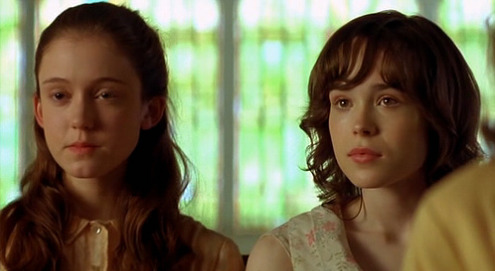
Another reason "Crime" drew the bad kind of notoriety was that it couldn't get a theatrical release, despite starring Ellen Page after her big breakout in "Juno," not to mention indie queen Catherine Keener and other name actors such as James Franco, Bradley Whitford and Michael O'Keefe. I think the film is flawed, but certainly is of sufficient quality to warrant more than the paltry television debut it received.

The final and most insidious reason for the film all but dropping off the face of the earth is the depiction of Gertrude Baniszewski, the caretaker who directed the assault against Sylvia and was responsible for her death. I remember when Bonnie was working on her story, she said something about the movie being sympathetic to "Gertie."

In Indianapolis, saying you're sympathetic to Baniszewski is akin to saying you think Stalin got a bum rap. People say it's wrong to demonize others, but sometimes the bill fits.

"An American Crime" couldn't be called a celebration of Baniszewski, but maybe a feminist defense of her actions. The film goes out of its way to depict her as a victim of abuse by men that she internalized and passed on to the girls under her care.

The depiction is reminiscent of Charlize Theron's portrayal of Aileen Wuornos in "Monster," which also drew accusations of treating a female killer with kid gloves. The unifying theme here is a cycle of abuse that women may perpetuate but not originate.

I do have to say something about the casting of Keener as Gertie. While not a classic Hollywood beauty, Keener is certainly easy on the eyes -- even disheveled and with little or no makeup during most of her screen time. The real Gertrude Baniszewski was one of the most fascinatingly ugly creatures you ever laid your eyes on.

If you Google her image, you'll see that somehow she looked even more frightening when dolled up for her court appearance. Compare that with Keener's put-together look on the stand, and I think it's fair to say a good deal of misplaced Hollywoodization has gone on.

The problem with the filmmakers' approach to such a well-known crime -- O'Haver co-write the script with Irene Turner based on the court transcripts -- is that it's so hard to comprehend such unspeakable acts, the audience can't relate to the people on the screen. The majority of Sylvia's torture at the hands of other children is related in a montage sequence of little power.

By instead focusing more on the character of Baniszewski, the film relegates Sylvia Likens to a cypher with no real identity -- she's simply a vessel for abuse. As depicted by Page, Sylvia is a nice church-going girl who is falsley accused of spreading rumors about Paula, the eldest daughter of the Baniszewski clan. Sylvia and her sister Jenny had been left in Gertie's care by their parents, who were itinerant carnies.

Sylvia never rails against her "punishment," even as it quickly escalates from paddling to burning her arms with cigarettes, and then growing much worse. She's not a person; she becomes a thing that others maltreat. We never understand why she does not protest when accused of doing something of which she is innocent.

"An American Crime" had one notable effect. The house at 3850 East New York Street had lain vacant for most of the time since the Likens murder, but interest renewed when word about the movie got around. Vandalism and break-ins, not exactly isolated given the building's infamy, ramped up. Eventually, authorities saw fit to have it torn down last year.

2.5 stars out of four


Thursday, August 12, 2010

Review: "Eat, Pray, Love"


Here's my six-word review of "Eat, Pray, Love": I wish they'd stopped at "Eat."

This new Julia Roberts star vehicle is based on the best-selling memoir by Elizabeth Gilbert about the year she spent traveling the globe to rediscover herself following a painful divorce. She spends four months each in Italy, India and Indonesia seeking nourishment -- for, as the title suggests, her body, soul and heart.

It's a more ambitious role than Roberts has tackled in the decade since her Oscar-winning turn in "Erin Brockovich," and one centered around a woman of refreshingly mature years. I admired Roberts' grasping for something meatier, but this film sticks her with an unrelatable character that even her coltish smile can't beautify.

Director Ryan Murphy, who co-wrote the screenplay adaptation with Jennifer Salt, spends an excessive amount of time setting up Liz's life in New York prior to her trip. In these sequences Liz is established as a successful but skittish woman who doesn't seem to belong anywhere, or to anyone -- even herself.

She quickly, and callously, decides to divorce her husband Stephen (Billy Crudup). Despite his flightiness, he does seem very determined about his desire to stay together and attempt to work things out. When she won't even try, our sympathy for her wanes.

Sooner than would seem appropriate, or even comprehensible, Liz ends up in the arms of David (James Franco), a much younger actor who turns her on to meditation and Hindu scripture. She soon decides that she needs to learn to love herself before she can love another again, though she at least packs her newfound spirituality for the trip.

The first sequence in Rome has an uplifting energy as Liz searches for the perfect pizza, learns the lingo, and absorbs the Italian devotion to beauty and pleasure without any American veneer of guilt. It's here that she seems to tame her self-absorption a bit, finds some new friends and truly grows as a confident individual.

The spiritual section in India shifts into a seriously downbeat gear, as Liz lives at a Hindu temple, prays and meditates, and verbally jousts with Richard (Richard Jenkins), a fellow American -- well, he's Texan, which to the typical New Yorker is far more exotic than the Far East.

Richard, who looks like James Taylor and talks like Obi-John Wayne, calls her "Groceries" for her healthy appetite and counsels her to clear her head of self-doubt and regret, or it will ruin her life. Richard knows this through personal experience, as he lays bare in a rooftop scene that's supposed to be revelatory and emotionally cathartic, but just makes the audience want to tiptoe down the stairs and escape.

The vistas are perhaps the most beautiful in Bali, but Liz's journey of discovery grows less genuine with every step. She romances a Brazilian businessman (Javier Bardem) who's also been through a painful divorce, and studies with a medicine man (Hadi Subiyanto) who looks like Yoda, but with a worse dental plan.

I confess that I found Liz's New Age-y proclivities a dreadful bore -- I'm still trying to wrap my head around the whole Guru Gita thing, which involves a bunch of people chanting at a painting of a woman, as near as I can figure. At 139 minutes, the movie feels sprawling and self-indulgent.

And I'm always suspicious of memoirs in which people ditch their entire lives for parts unknown and unexpected adventures -- and, it turns out, for good reason.

After seeing the movie and doing a little Googling, I learn that the real Elizabeth Gilbert pitched the idea for her book to a publisher before embarking on her journey, and used the advance to pay for it.

"Eat, Pray Love" seems less like a year of wild abandonment to indulgence and exploration of the inner soul, and more a calculated mission to land on Oprah's Book Club. It's mass-produced gruel, dressed up as native cuisine.

2 stars out of four

Thursday, April 8, 2010

Review: "Date Night"


Tina Fey and Steve Carell are gifted comedians and likable performers. They're the centerpieces on their smartly-written back-to-back TV shows, "30 Rock" and "The Office."

They're so good, in fact, that watching them slum their way through inferior material like this is depressing.

"Date Night" is a lower-middle-brow comedy about an upper-middle-class New Jersey couple who get their marriage spark reignited by a crazy night in Manhattan where they're mistaken for blackmailers and chased by cops and bad guys alike. I don't know about you, but I'm actually getting sleepy just describing it.

Fey and Carell make for a good team, and they invest themselves in every joke, managing to save a few scenes that end up being pretty funny.

Yeah, they're more or less playing variations on their television characters -- Liz Lemon's self-deprecating neurotic charm and Michael Scott's diffident discomfort in his own skin -- but we enjoy those people so much, it's not a big deal that they're repurposing.

When the pair are just inhabiting a scene, riffing and ad-libbing, the effects are pleasurable. But then the movie has to fall back on its idiot plot -- car chases, scary guys with guns, etc.

They do make for a believable couple. Phil Foster is a tax accountant, and Claire is a real estate agent. Harried and worn out, they barely keep the romance on life support with the occasional date night.

There's a great little moment where Claire is fixing herself up for a night out, and Phil barely glances at her when he walks in the door, and we can see she's crushed. But he redeems himself by taking her to Claw, the hottest new Tribeca restaurant. They have $50 soup, a month-long backlog for reservations and snootily answer the phone, "Claw, you're welcome."

When another couple misses their reservation, the Fosters pretend to be them. Unfortunately, a pair of toughs show up and, thinking they're the other couple, to demand a Flash drive with some juicy material on it.

It's all one big lame case of mistaken identity, and the rest of the movie is spent with the Fosters on the lam, trying to track down this mysterious drive while skirting the hoods and the police.

Directed by Shawn Levy ("Night at the Museum") from a script by Josh Klausner, "Date Night" features a lot of cameos by well-known actors who run into the Fosters. Some are pleasing -- I liked James Franco as a skeevy character who dubs himself "Taste" -- while others just lie there.

Their stale adventures take the Fosters through Central Park, breaking into a friend's office, and showing up on the doorstep of an old client of Claire's (Mark Wahlberg) who has a background in security and is apparently incapable of wearing a shirt.

Throwaway jokes are usually the best ones. There's one bit where they have to infiltrate a mobbed-up strip club, and Claire sneaks into the strippers' locker room and emerges in a tart little outfit. "It's the only one long enough to cover my Caesarean scar," she explains.

Chuckle-worthy little moments like this almost -- almost -- save "Date Night" from itself.

2 stars out of four