Delivering immeasurable volumes of snark about movies and anything else that pops into my head
Showing posts with label bradley whitford. Show all posts
Friday, February 21, 2020
Review: "The Call of the Wild"
No, the CGI dog isn’t that great. Is it terrible? It certainly didn’t play well in the trailers for “The Call of the Wild.” And people have enjoyed dunking on the movie for the weird dynamic of using a human actor in green spandex to act out the part of a giant canine, which animators then digitally painted over.
But you know what? It actually doesn’t matter that much. The CGI may be a bit jarring at first next to a bunch of humans, but by 10 minutes in it didn’t bother me anymore. It’s probably not much worse than the critters in “The Lion King” from last year, the difference being there were no humans to foul up the juxtaposition.
I went into “The Call of the Wild” not expecting much. Honestly, I only went because my boys saw the trailer during “Sonic the Hedgehog” and insisted they wanted to see it. Pick them up from school, a little Chick fil-A, a boys’ night out and momma gets some well-earned solo time.
So I was surprised to find myself increasingly engaged in the story of Buck, the spoiled dog who is shipped off to Alaska for a life of adventure and peril in Jack London’s iconic novel. By the time he’s dog-napped from a comfortable existence as the pet of a wealthy judge and winds up part of a dog sled team, the animation issue had already slid away.
As good as the first half is, the second is pretty spectacular. Harrison Ford only shows up a couple of times during the early going, and in fact at first I was worried he was only going to be a bit player.
But his character, John Thornton, and Buck reunite around the 40-minute mark and the rest of the way it’s all about their relationship.
This is truly one of Ford’s most sensitive and soulful performances. I know that may sound strange for a dog movie, but it is so. There’s no steely hint of the action hero he was for so many decades, or the rapscallion charm of Indy or Han. It’s a truly vulnerable performance you can’t get out of a younger actor.
His John Thornton is a man steeped in regret, who has come to Alaska to make one last attempt at finding meaning in a life that has fallen into shambles. His son, who always dreamed of going on an adventure in the hinterlands, passed away and it eventually doomed his marriage. He spends his days in a tent on a hill outside town, drinking and stewing.
It is not an exaggeration to say that John probably wouldn’t have lived much longer without meeting Buck.
They leave the prospecting village, where Buck had been part of the mail delivery team, and go off for that adventure. It’s not too difficult to see that John is substituting the dog for the son he lost. But it gives him purpose and drive again.
As you may remember from childhood readings, Buck falls in with a pack of timber wolves, and spends more and more of his time away from John. The man is old and wise enough not to resent this, seeing it less as a fraying of bonds as the natural evolution of a pup who must eventually leave one family and start one of his own.
The movie, directed by Chris Sanders (“Lilo & Stitch”) from a screenplay by Michael Green, follows the first part of the novel fairly well but departs in significant ways in the second. There are no other prospector partners for John, no attacks and reprisals on savage Indians (with not-terribly-concealed racial animus).
The search for gold is wholly dispensed with as a worthy endeavor; John and Buck travel to the edge of the world and find the mythical “lost cabin” that supposedly marks the way to a fortune of gold, and in fact they quickly find large nuggets of the stuff in the nearby river. But John uses it as pieces on a chess board or stuffs it into his pockets like lost buttons.
Dan Stevens plays Hal, the villain of the piece who does covet gold for its own end. If there’s a quibble to be had with the movie, it’s the sneering cartoonishness of this character, as he’s written and played. John and Buck encounter him early in the story, and Hal forms a hatred for them that seems far out of proportion to any offense they gave.
They may as well have named him Snidely and given him extravagant mustachios to twirl.
But, like the animation that brings Buck to life, this weakness quickly recedes in importance. The heart and soul of this movie is the bond between man and dog, and how two who are lost find a semblance of home in each other’s companionship.
There’s a wonderful stillness to this movie that we don’t see much at the cinema anymore. I reveled in scenes of Buck and John just encountering a beautiful vista, and simply stopping for a moment to take it all in. At 100 minutes, this is the rare movie that neither tarries nor feels like it’s in too much of a hurry.
I went to “The Call of the Wild” to kill time, and came away genuinely moved, and rejuvenated.
Sunday, April 21, 2019
Video review: "Destroyer"
Nicole Kidman has de-glammed for roles before, mostly notably putting on a prosthetic nose to play Virginia Woolf in “The Hours,” for which she won an Oscar. That’s a pretty standard M.O. in Hollywood: get grizzled, get Oscar gold.
The boys do it too: see Matthew McConaughey in “Dallas Buyers Club.”
But Kidman goes beyond unadorned to downright fugly in “Destroyer,” a hard-edged drama in which she plays a police detective who’s been spiraling toward the bottom for years. With her face mottled, eyes like two dim lamps peering out of dark holes, Erin Bell looks like she’s stared into the face of the devil and slowly gotten crispy.
She’s a boozer, a user, a cop who seems to spend very little time actually investigating crime. Seemingly sleeping out of her police car, she’s following up on an old case that involves an undercover operation she was in years ago.
It centers around Silas (Toby Kebbell), a drug dealer who inspires fear and loyalty in his crew. And there was Chris (Sebastian Stan), the fellow cop who posed as half of a couple with her and led to a real-life romance.
Other players include Erin’s estranged teen daughter, Shelby (Jade Pettyjohn), who’s about to make some bad choices with her scuzzy boyfriend, and Bradley Whitford as a wealthy lawyer involved with the drug trade.
Directed by Karyn Kasuma from a screenplay by Phil Hay and Matt Manfredi, “Destroyer” is a tough watch but a rewarding one. Kidman deserved the Oscar nomination she didn’t get, not for just taking off her makeup but for putting on the face of self-destructive character who worms her way under your skin.
Bonus features are sparse in quantity but long in quality.
There are two separate feature-length commentary tracks, one by Kasuma -- pity Kidman did not join her -- and another with the script men. Plus there’s a making-of documentary, “Breakdown of an “Anti-Hero: The Making of Destroyer.”
Movie:
Extras:

Sunday, April 15, 2018
Video review: "The Post"
In a time when journalism in general and newspapers in particular are under so much attack -- both from economic tidal forces within the industry and political assaults from the White House --- here is a good old-fashioned drama very much in the vein of “All the President’s Men” that extols those who risk much for the simple reward of telling the truth.
“The Post” is Steven Spielberg’s ode to an era when journalists and newspapers risked all to inform the public, and also a summoning of that same spirit in a time when it’s needed more than ever.
“This is who we were,” the film practically chants, and exhorts. “This is what we can be again.”
Meryl Streep and Tom Hanks play Katharine Graham and Ben Bradlee, the owner/publisher and editor of The Washington Post, respectively. In 1972 their rival, the New York Times, first published excerpts of the Pentagon Papers, a damning recitation of the nation’s failures in Vietnam, before a court injunction slammed down on them.
The Post team -- which also includes Bob Odenkirk, Carrie Coon and David Cross -- got hold of the papers and had a choice to make: publish, and face the quite literal possibility of putting the Post out of business, or press on. We all know the choice they made, but “The Post” is the story of what went on behind that agonizing decision.
Hanks is great -- he always is -- but Streep is the pivotal figure in the story. We learn about her own insecurities, a rich debutante inheriting the Post from her late husband; about what it takes to be a female leader in a time when women were routinely not listened to; and about the financial crisis that coincided with the decision, in which Graham took the company public on the stock exchange.
Part legal procedural, part historical drama, but most of all a portrait of the power -- and risks -- of journalism, “The Post” is director Steven Spielberg’s best film since “Lincoln.”
Bonus features are quite good. In a clever twist, they’re divided into sections like a newspaper would be. The DVD has:
- “The Style Section: Re-Creating of an Era,” which explores the look and feel of the Washington Post newsroom in the 1970s.
- “Arts and Entertainment: Music for the Post,” about the 44-year partnership between Spielberg and composer John Williams.
- “Stop the Presses: Filming The Post,” an on-set visit with Spielberg and crew during production.
- “Layout: Katharine Graham, Ben Bradlee & The Washington Post,” a look at the real-life personalities behind the legend.
- “Editorial: The Cast and Characters of The Post,” about putting together the cast of performers.
Movie:
Extras:
Wednesday, December 20, 2017
Review: "The Post"
“The Post” is both rose-colored hagiography and a bracing call to arms. It summons up the days of our hallowed past, in which crusading newspapers took on the most powerful and risked their very enterprises to tell people the truth.
And it’s a not-at-all bashful reminder that this sort of thing is more needed now than ever before.
The film, directed by Steven Spielberg from a script by Liz Hannah and Josh Singer, tells the tale of how the Washington Post in 1971 faced off with the Nixon administration to publish the Pentagon Papers, a top-secret review that captured the depth of the lies and depravity behind our nation’s tragic involvement in Vietnam.
It’s at once a terrific character study, with Meryl Streep and Tom Hanks playing Katharine Graham and Ben Bradlee, respectively, the publisher and editor of the Post. Hanks is very good -- he’s always very good -- but ultimately Streep carries the picture as an accidental leader who reaches inside herself to find strength and resolve.
The movie is also an excellent procedural drama, taking place over the course of just a few days as the Post reporting team first races to obtain the papers, which their rivals at the New York Times already had, and then Graham agonizes over whether to publish them in defiance of a federal injunction.
All of this was happening at the exact moment the Graham family was taking the company public on the stock exchange, in an effort to transform the Post from a “regional paper” into a titan to rival the Times on a national stage. This little-recognized bit of history, in which Graham had to make her decision knowing it could literally doom the newspaper, adds an extra layer of weight to the film.
Co-screenwriter Singer is fresh off an Oscar win for “Spotlight,” so we again see the painstaking attention to detail of how reporters dig up information, and editors/publishers decide what to do with it. “The Post” is an unsentimental portrait that underscores Bradlee’s rampant ambition; at one point he dispatches an intern to take a train to New York City and spy on the doings at the Times.
Graham and Bradlee are depicted as antagonists rather than allies, at least at first. He sees her as little more than a rich debutante who was handed the reins of a great newspaper after her husband killed himself -- a woman more concerned with society events and friendships with the elite than running a newsroom.
It’s perhaps unkind, but it’s also true: that’s how Graham sees herself. But again: only at first.
“Kathryn, keep your finger out of my eye,” he snarls at her at one point, in an engagement between boss and employee that seems very alien in today’s top-down times.
The rest of the cast is magnificent, and also expansive: Bob Odenkirk as Ben Bagdikian, the lead reporter on the story; Carrie Coon as Meg Greenfield and David Cross as Howard Simons, other top scribes; Bruce Greenwood as Bob McNamara, former Defense Secretary and personal friend of Graham; Tracy Letts as Fritz Beebe, Graham’s right-hand man and rock; Bradley Whitford as the (overly) timid voice of caution; Matthew Rhys as Daniel Ellsberg, the whistleblower who leaked the papers; Jesse Plemons as the young lawyer brought into defend the Post; and Michael Stuhlbarg as Abe Rosenthal, fierce competitor at the Times, and another Graham friend.
Spielberg’s direction shows the flair of a master who, at age 70, hasn’t lost anything off his fastball. I love the film’s tactile feel -- the dank grayness of the newsroom, the clanky busyness of the typesetters assembling the metal linotype for the next day’s front page. Longtime collaborator John Williams’ musical score paces the movie with energy and solidity.
“The Post” is a lot of things, and certainly a magnificent film is one of them. It’s about getting and running the truth, no matter the consequences. About how those in power use knowledge as something to withhold, distort or wield as a cudgel.
The thing I’ll take away the most from the movie is it’s a woman’s story. Katharine Graham, rich and renowned, suffered from imposter syndrome just as most of us do. She stood up in a world made by men and put her own mark on it.
There’s a terrific moment near the end, where they’re standing on the steps of the Supreme Court after having won a decision against the injunction. Rosenthal and the other men talk into the microphones, pronouncing for posterity. Kay Graham savors the victory for herself, striding down silently past a small sea of women who smile upon her with open admiration and gratitude.
Lovers of free speech, stand up: Your mother’s passing.
Sunday, July 3, 2016
Video review: "I Saw the Light"
“I Saw the Light” falls into that category of biopics that are dominated by a great performance, but the movie surrounding it falls a little short.
We’ve seen it before in films like “Ray,” “Walk the Line” or “Capote” -- stories about legendary artists who knew trouble and strife in their lives, along with glory and fame. The problem is that it’s hard to take the stray threads of a person’s life, the contradictions and randomness, and weave them into cohesive narrative.
That challenge even comes with someone like Hank Williams, who died a country music legend at age 29. Tom Hiddleston plays the honky-tonk king as a charming scamp who couldn’t resist the siren call of booze, women and worse. He ends up hurting everyone he loves, most especially himself.
Writer/director Marc Abraham plays it straight in his storytelling, charting Williams’ rise from local radio crooner to favorite son of the Grand Ole Opry. Elizabeth Olsen plays his bossy wife, Audrey, who wanted a singing career of her own and takes it out on Hank when this doesn’t pan out. He starts to dally around, she resents being penned up at home like his plaything, and the bitterness blooms.
Much has been made of Hiddleston, a Brit, playing such an iconic American figure. I for one don’t mind; he looks the part and occupies the role with assurance and a deep sense of tragedy. His singing is quite good, though not much of an impersonation of Williams’ signature twang and moan.
One misstep Abraham makes is using interviews from people who knew Williams to cover the boring exposition stuff. It distracts us from the main character’s journey, not to mention comes across as a lame “Behind the Music” stunt.
Still, “I Saw the Light” is a worthy if not terribly daring biopic. It shows us the troubled soul of Hank Williams, the smiling man who crooned about heartache and despair.
Video extras aren’t terribly extensive, but they are impactful. Abraham offers a feature-length commentary track – though, in a novel move, you have to download it from iTunes first. There are also deleted scenes and three featurettes: “Illuminating A Legend: Inside I Saw the Light,” “Talking Hank” and “A Night in Nashville: Premiere and Musical Performance by Tom Hiddleston.”
Movie:
Extras:
Thursday, March 31, 2016
Review: "I Saw the Light"
I wanted to love this movie but did not. I admired it, enjoyed it, will certainly recommend it to you. But love is too big a word.
Tom Hiddleston plays country music legend Hank Williams, who died in 1953 at the age of just 29, leaving behind dozens of songs that are still iconic -- “Your Cheatin’ Heart,” “Move It on Over,” etc. He died long enough ago, right at the start of the information age, that he seemingly belongs to a different epoch, sliding in somewhere between history and mythology.
“I Saw the Light” was written and directed by Marc Abraham, a longtime producer who directed one other feature, the overlooked 2008 drama, “Flash of Genius.” It’s based on a biography by Colin Escott, George Merritt and William MacEwen.
The film adaptation lands as a fairly conventional music star bio, charting Williams’ slow rise to fame and gradual decline due to ill health, poor choices and barrels full of alcohol.
Parts of the story are very strong, others less so, but we’ve seen it all before -- the boozin’ and druggin’, stretches laid up in a hospital bed, the birddogging with a revolving door of beautiful young women, while the resentful wife back home complains about how he’s always on the road singing for their supper.
I did learn a few things about Williams I didn’t know before, like that he had spina bifida, causing lifelong pain that spurred him toward drink. Or that, at the height of his fame, he recorded under the pseudonym of Luke the Drifter, a fictional half-brother, spouting pastoral recitations about life and loss. They didn’t sell very well, but he did it just because it gave him an outlet for thoughts he couldn’t express in his honkytonking tunes.
Hiddlesston is very fine in the role, and I’m sure he will get some consideration when the next awards season rolls around. He plays Williams as a man who is simultaneously very self-aware and a mystery to himself. He does the things he does because it’s the way he was made, even if it causes himself and others pain. He was the man who smiled at everybody and sang about tragedy and heartbreak.
“I show it to them. So then they don’t have to take it home,” he grudgingly explains to a mystified reporter.
The actor sounds really, really good singing in the movie. I’m not sure how much he sounds like Hank Williams. Not enough twang and moan to pass as authentically hillbilly. Hiddleston is a Brit, after all, and even Americans north of the Mason-Dixon line struggle with the Southern sound. But I believed him as somebody people would pay money to hear.
Elizabeth Olsen plays Audrey Williams, his first wife and manager, and she’s anything but the usual wallflower. She’s depicted as tough, smart, self-preserving, edging into domineering. Audrey wanted her own singing career but didn’t have the pipes -- “She sounds like a damn billy goat!” is how one heckler puts it -- and blames him for not helping her along. They cause each other plenty of strife, and at some point she checks out emotionally. We can’t really blame her.
The film’s biggest misstep is to break up the story with supposed archival interviews of actual figures in Williams’ life, like producer Fred Rose (Bradley Whitford). Abraham tries to employ this as a tool to relay the expository stuff as seamlessly as possible. But it still comes across as a lame “Behind the Music” knockoff.
“I Saw the Light” is a solid biography, but it doesn’t really stand out from the pack. Like “Ray” and “Walk the Line,” the film is good at capturing the essence of an artist but has trouble bending a big, untidy life into a straight narrative line.
Thursday, December 19, 2013
Review: "Saving Mr. Banks"
Hollywood loves to tell stories about itself, and here’s a movie from Walt Disney Pictures about the making of one of its own iconic films, and starring Walt himself. Or rather, co-starring Tom Hanks as Walt Disney, a supporting role for the main character of author P.L. Travers, played by Emma Thompson.
The tale is quite simple: the irascible, guarded Mrs. Travers – don’t you dare call her Miss – doesn’t want to sell her novel “Mary Poppins” to Disney and see it turned into a piece of puffy fantasy. But she needs the money, and agrees to come out to California to collaborate with the film’s production team, while Old Walt works his twinkly charm to convince her to sign over the book rights.
The movie is essentially one long dance between Travers and Disney, with the two struggling mightily to understand a person so extravagantly different from themselves. Of course, we know how it all turned out.
(Or, at least we think we do. The film ends with the pair more or less making their peace over their very different conceptions for “Mary Poppins,” but in fact she so reviled what Disney did with her work that she forbade any further adaptations of her books.)
I really wanted to like this movie, but it held so very few surprises for me. We know early on from the flashbacks to Travers’ Australian childhood that she adored her sweet, alcoholic wastrel father (Colin Farrell) and used him as the basis for the father figure, Mr. Banks, in “Mary Poppins.” So it’s all a matter of Disney learning enough about her to puzzle out the truth.
The scene where he finally confronts her about her fears is splendidly acted by Hanks and Thompson, but flat as dry toast. It’s never a good thing when the audience is three steps ahead of the characters.
The early section is mostly about Travers playing the fish-out-of-water role, peevishly negotiating the Hollywood scene. She’s disruptive and contemptuous, treating everyone she meets quite shabbily, especially Disney’s underlings. She even dismisses the songs written for the film by the legendary Sherman Brothers (B.J. Novak and Jason Schwartzman), and regards some animated critters as vile interlopers.
Bradley Whitford turns up as screenwriter Don DaGradi, Kathy Baker is a tough studio exec and Rachel Griffiths plays Travers’ aunt. Paul Giamatti brightens things up as her appointed chauffeur, an obstinately cheerful man who serves absolutely no purpose in the story, but we just like having him around.
Since we’re discussing a film about the creative process, let me tell you a little bit about mine. I prefer to see one movie at a time, write the review within the next 24 hours, more or less be absorbed in that experience, and move on to the next. The crush of late-year screenings made that impossible, and quite frankly, I’m having trouble recalling “Saving Mr. Banks” very well. It’s only been a few days since I’ve seen it, but mentally it’s already slipping through my fingers like sand.
The best movies, and sometimes even the worst, stick with you because they make a strong impression that lingers. There are films I’ve seen only a single time many years ago that I can evoke with great clarity, both the movie itself and how I reacted to it at the time.
I’m afraid “Saving Mr. Banks” is already floating away like Poppins herself, she to her next nanny job and me the next movie review. I just wish there had been a spoonful of magic while we journeyed together.
Monday, August 23, 2010
Reeling Backward: "An American Crime" (2007)

Although Reeling Backward has come to be known as the classic film column, I've stated several times that I reserve the right to reel back as far -- or as near -- as I want. In this case, I'm only going three years into the past.
"An American Crime" was a big story in Indianapolis when its production was announced in 2006. The torture murder of Sylvia Likens remains the city's most notorious crime, and has been the subject of a number of books, magazine articles and even other movies. In the same year it was released, "The Girl Next Door" also came out, with names changed and more of a horror film bent, but clearly based on the Likens case.
And for good reason: The 16-year-old girl was beaten, starved, burned, sexually assaulted and tied up over the course of several weeks in 1965. For good measure, the words "I'm a prostitute and proud of it" were branded onto her stomach with a hot wire. Horrifically, many of these despicable acts were carried about by neighborhood children, who were convinced they were merely participating in an elaborate "punishment" meted out for a wayward teen.
The making of the movie made local news -- including an A1 story for The Indianapolis Star by film critic Bonnie Britton that I edited -- but for all the wrong reasons. Chiefly among those was that the film, despite being set explicitly in Indianapolis and directed by native son Tommy O'Haver, was shot elsewhere for financial reasons. (Indiana has film incentives, but they're among the lowest of any state that offers them.)
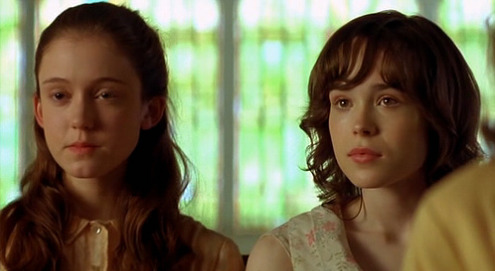
Another reason "Crime" drew the bad kind of notoriety was that it couldn't get a theatrical release, despite starring Ellen Page after her big breakout in "Juno," not to mention indie queen Catherine Keener and other name actors such as James Franco, Bradley Whitford and Michael O'Keefe. I think the film is flawed, but certainly is of sufficient quality to warrant more than the paltry television debut it received.
The final and most insidious reason for the film all but dropping off the face of the earth is the depiction of Gertrude Baniszewski, the caretaker who directed the assault against Sylvia and was responsible for her death. I remember when Bonnie was working on her story, she said something about the movie being sympathetic to "Gertie."
In Indianapolis, saying you're sympathetic to Baniszewski is akin to saying you think Stalin got a bum rap. People say it's wrong to demonize others, but sometimes the bill fits.
"An American Crime" couldn't be called a celebration of Baniszewski, but maybe a feminist defense of her actions. The film goes out of its way to depict her as a victim of abuse by men that she internalized and passed on to the girls under her care.
The depiction is reminiscent of Charlize Theron's portrayal of Aileen Wuornos in "Monster," which also drew accusations of treating a female killer with kid gloves. The unifying theme here is a cycle of abuse that women may perpetuate but not originate.
I do have to say something about the casting of Keener as Gertie. While not a classic Hollywood beauty, Keener is certainly easy on the eyes -- even disheveled and with little or no makeup during most of her screen time. The real Gertrude Baniszewski was one of the most fascinatingly ugly creatures you ever laid your eyes on.
If you Google her image, you'll see that somehow she looked even more frightening when dolled up for her court appearance. Compare that with Keener's put-together look on the stand, and I think it's fair to say a good deal of misplaced Hollywoodization has gone on.
The problem with the filmmakers' approach to such a well-known crime -- O'Haver co-write the script with Irene Turner based on the court transcripts -- is that it's so hard to comprehend such unspeakable acts, the audience can't relate to the people on the screen. The majority of Sylvia's torture at the hands of other children is related in a montage sequence of little power.
By instead focusing more on the character of Baniszewski, the film relegates Sylvia Likens to a cypher with no real identity -- she's simply a vessel for abuse. As depicted by Page, Sylvia is a nice church-going girl who is falsley accused of spreading rumors about Paula, the eldest daughter of the Baniszewski clan. Sylvia and her sister Jenny had been left in Gertie's care by their parents, who were itinerant carnies.
Sylvia never rails against her "punishment," even as it quickly escalates from paddling to burning her arms with cigarettes, and then growing much worse. She's not a person; she becomes a thing that others maltreat. We never understand why she does not protest when accused of doing something of which she is innocent.
"An American Crime" had one notable effect. The house at 3850 East New York Street had lain vacant for most of the time since the Likens murder, but interest renewed when word about the movie got around. Vandalism and break-ins, not exactly isolated given the building's infamy, ramped up. Eventually, authorities saw fit to have it torn down last year.
2.5 stars out of four
Subscribe to:
Posts (Atom)