It’s strange that it took almost 15 years to get a sequel to “The Incredibles,” the one Pixar animated film that seemed to beg for a follow-up. It appears Disney wanted to wait for original writer/director Brad to find the time and gumption to tackle the project, which was probably the right call.
Alas, “Incredibles 2” -- I didn’t mistype; they dropped the “the” for the sequel -- is a fun and frenetic movie that fails to live up to its predecessor.
I’m still recommending it, because you can’t deny the entertainment quotient it brings to the table. My boys have already watched the Blu-ray through once and are ready to go again. But this is the sort of movie that you might watch one time with your kids, and then wander out of the room for their subsequent viewings.
The story picks up right where the first one left off, with a battle with the nefarious Underminer. After that, the Parr family -- strongman Mr. Incredible (voice of Craig T. Nelson), stretchy Elastigirl (Holly Hunter), speedy Dash (Huck Milner) and invisible Violet (Sarah Vowell) -- gets a helping hand from a P.R. tycoon (Bob Odenkirk) whose sister (Catherine Keener) is a tech whiz.
Their idea: make outlawed superheroes palatable to the public again by doing a media push spotlighting Elastigirl. They figure she’ll be more appealing than Mr. Incredible because she doesn’t tend to leave everything smashed into dust. That leaves him at home stuck with the kids, including baby Jack-Jack’s burgeoning new powers.
They run into the clutches of Screenslaver, a mysterious figure who loathes supers and is using television screens to hypnotize them into doing bad things. Iceman Frozone (Samuel L. Jackson) returns to help out as Mr. Incredible’s glorified sidekick, though the movie also introduces a bunch of young (well, mostly) superhero wannabes looking to follow in the Incredibles’ footsteps.
It doesn’t have the verve and imagination of the first one, but “Incredibles 2” is still must-see for children.
Bonus features are quite handsome. There’s an all-new short film starring fashion maven Edna Mode, where we get to see more of her babysitting duties with Jack-Jack, as well as “Bao,” the touching shirt film that accompanied the theatrical release. Plus 10 deleted scenes, commentary tracks by animators and more than a half-dozen making-of short documentaries.
“I don’t like the parts where they talk, talk, talk, but I do like the parts where they fight!”
That’s the review my 4-year-old gives of “Incredibles 2,” and I couldn’t put it any better myself. But I’ll try, given I’m supposed to be the professional at this.
These days it seems like any movie that makes half a buck gets a sequel, even when it’s totally unnecessary. (Oh hai, “Pacific Rim Uprising.” We weren’t talking about you, I swear.) But “The Incredibles,” the one Pixar animated film that seemed to beg for a follow-up, was left curiously lying fallow for nearly a decade-and-a-half
(And you're eyes aren't deceiving you; the first movie was "The" Incredibles, while the second drops the the. Fooled me at first, too.)
Writer/director Brad Bird was busy making the best of the “Mission: Impossible” movies and the well-meaning but disappointing passion project, “Tomorrowland.” So here was a chance to get back to his heyday.
Problem is, the Brad Bird of 2018 seems to have forgotten how to tell stories about a family of superheroes with the same aplomb. “The Incredibles” was terrific because the storytelling seemed so effortless. Characters were sharp-edged and vibrant. The plot unspooled without pretense or hurry, giving us zingy action scenes but also some hefty themes about how the world is a dangerous place.
“Incredibles 2” is certainly very entertaining, but it doesn’t have the polish or style of its predecessor. Dialogue scenes, as my almost-kindergartner acutely observed, go on waaaaayyy longer than they need to, and don’t further the characters or build the mood.
There’s also a weird sitcom-y feel to this. The Parr family often gets bogged down in minutia, like tackling speedster Dash’s (Huck Milner) “new math” homework, or which suit stretchy mom Elastigirl (Holly Hunter) is wearing or when invisible daughter Violet (Sarah Vowell) has her date with her dreamy classmate, Tony.
And someone’s always on baby-watching duty for little Jack Jack, the tantrum-prone tyke who showed all sorts of weird, crazy powers in the last movie, and tries a few more new ones on for size. Bird actually makes a joke of this, as the Parrs literally hand off the baby to each other in the middle of a fight, and supremely Eurotrash designer-to-the-supers Edna Mode (voiced by Bird himself) even gets a spell watching over him.
This one picks up right where the last movie left off. Super-heroes were outlawed, at least publically, 15 years ago, but now Mr. Incredible, the strongman patriarch voiced by Craig T. Nelson, and his family are back in the limelight. This draws the attention of telecommunications tycoon Winston Deavor (Bob Odenkirk), who wants to make supers legal again, with the help of his inventor genius sister, Evelyn (Catherine Keener).
Mr. Incredible’s smashy-smashy M.O. isn’t the most favorable for the P.R. push, so Elastigirl finds herself in the limelight while hubby is stuck at home -- a fancy new one, at that -- dealing with the kids. This gives us a chance to fully explore her capabilities in a way the last movie did not. She even gets her own personalized motorcycle that can separate into two piece to maximize her powers, which are given full display in a match against a runaway train.
The baddie is Screenslaver, a mysterious super-hater who uses television screens to hypnotize people into doing his bidding.
Too-cool Frozone (Samuel L. Jackson) is back, still stuck in wingman mode -- how about he gets starring role in a short or something? There is also a gaggle of new, (mostly) younger hero wannabes who are inspired by Elastigirl to take a step forward. The most notable is Void (Sophia Bush), who can create interdimensional portals.
I enjoyed myself, but “Incredibles 2” just doesn’t have the verve and zip of the first one. For some strange reason, even though no time has passed between movies, Mr. Incredible is drawn to look much aged, with deep creases in his face and baggy eyes. It’s almost like watching a franchise get old before our eyes.
Director Paul Greengrass is not a man who deals in moral absolutes. In “Captain Phillips” he, along with screenwriter Billy Ray and star Tom Hanks, relate the true story of an American cargo ship captain who was kidnapped at sea by Somali pirates. Rather than making the bad guys faceless, soulless villains, he portrays them as real, thinking individuals who feel pressured to commit acts of piracy.
This is not to say that the film attempts to paint a flattering portrait of the pirates in favor of the American. But by making the guys behind the guns seem full-blooded and human themselves, it only serves to underscore the peril of the title character.
Barkhad Abdi is just terrific as Muse, the head of the pirates. Desperate, but also clever and empathetic, he engages in a war of wills with Phillips, who spends the second half of the movie as his prisoner, crammed into a dingy lifeboat.
The fact that Abdi, an acting novice, manages to hold his own with a powerhouse like Hanks speaks well not only of his own screen presence, but Greengrass’ expert direction.
The scene where Phillips is finally rescued from his ordeal and brought aboard a Navy ship for medical treatment is some of the best acting you will ever see, with Hanks shining as a man who's been through hell and is trying to keep it all together, and failing.
A live-wire act coupled with a deep character study, “Captain Phillips” is the rare drama that doesn’t settle for simple black-and-white answers.
Video extras are the same for Blu-ray and DVD versions, and have a certain amount of heft without being particularly ambitious. There are three behind-the-scenes featurettes about various aspects of production, and a feature-length commentary track supplied by Greengrass.
James Gandolfini may have not been most people's notion for a romantic lead, with looks like an ex-jock gone to pot and wallowing in anger. But the late actor showed just how much charisma he harbored in his balding, paunchy body in "Enough Said," an affecting romantic-drama from writer/director Nicole Holofcener.
The film stars Julia Louis-Dreyfus as Eva, a 50-ish masseuse who's divorced, single and has a teen daughter about to leave for college. At a party she meets Albert (Gandolfini), who's in a very similar life situation. They have a date that turns into a tenuous relationship, which seems to be going fine until a strange coincidence throws them off.
Eva learns that her new friend (Catherine Keener), who constantly bad-mouths her ex-husband, used to be married to Albert. So the horrible guy she's been hearing about is actually her new beau.
Logic says that shouldn't really make a difference, but in Holofcener's carefully observant story, it most certainly does. The film understands how lonely, damaged people react when letting their guard down for a new relationship.
The actors acquit themselves wonderfully, including the textured supporting performances by Toni Collette, Tracey Fairaway, Eve Hewson and Tavi Gevinson. One of the nice things about Holofcener's movies is that she populates them with fleshy, believable characters.
Easily of the year's best indie films, "Enough Said" falls into the "don't-miss" category.
Alas, video extras are sorely lacking. The DVD comes with only the theatrical trailer and a few promotional featurettes. Upgrade to the Blu-ray edition and you get a "Second Takes" feature.
“Captain Phillips” is in some ways two separate movies tied together by the same event: the first capture of an American ship by pirates since the 1800s. Both are equally effective at evoking a harrowing sense of tension – even though, since the film is a chronicle of real events, we know the title character makes it out alive.
Based on a book co-written by the actual Captain Richard Phillips, the story starts out as the tale of a group of cargo ship crewmen resisting armed intruders, a classic us-versus-them saga. The audience is encouraged to look upon the Somali pirates as bloodthirsty killers and thieves, while the resolute captain (Tom Hanks) is the noble hero beset by them.
Then a curious thing happens, and the second half of the film shifts to the confines of a stuffy, tiny motorized lifeboat where the four pirates have escaped with Phillips as their abductee.
Screenwriter Billy Ray swings to an intimate character study, where we learn the Somalis are thinking, feeling individuals who capture ships not out of pure greed, but to appease the tyrannical warlord who rules them. They come from a society where men are valued by how much ransom money they bring in. Their desperation in many ways mirrors that of Phillips.
Director Paul Greengrass is a seasoned expert at portraying real, violent events with a clear eye and a steady hand (“United 93,” “Bloody Sunday”). By not overdramatizing the proceedings but letting them play out with organic emotions, Greengrass manages to underline the humanity of the peril without becoming maudlin or manipulative.
And, of course, the movie is a showcase for yet another one of Hanks’ brilliant performances. He’s been so good for so long that we’ve come to expect nothing less than excellence out of his acting roles. In a perverse sort of homage, we tend to under-praise his efforts because of the high standard he has maintained for a quarter-century. I certainly hope the Academy Award voters do not do so.
I was pleased to find Greengrass employed authentic African actors to play the Somalis rather than relying on performers from the U.S. or England or wherever. They all acquit themselves well, especially Barkhad Abdi as Muse, the scrappy, cagey pirate leader, and Faysal Ahmed as Najee, the excitable enforcer who often butts heads with him.
Really, Phillips and Muse are the main characters of the piece, and Greengrass and Ray give us pivotal scenes of each man before, during and after their confrontation. We discover the two “captains” aren’t so very different than we’d imagined – including facing larger pressures from their superiors to carry out policies that won’t endear them to their underlings.
As Phillips himself puts it: “We’ve all got bosses.”
Things build to a fever pitch when a U.S. destroyer arrives on the scene, followed by a team of Navy sharpshooters. You may have already read the astounding account of how SEAL Team Six managed to put an end to the kidnapping, but seeing it rendered in sight and sound is a spellbinding experience.
The film’s version of events does omit some key facts, such as the fact the pirates’ comrades were trying to bring in other captured vessels carrying more than 50 hostages to act as human shields. From a storytelling standpoint it’s a wise move, but it leaves the film open to charges of focusing on the plight of an American to the detriment of foreign-born victims.
The movie does not engage in so much equivocation as to make the Somali pirates seem blameless, or the Americans appear as unflawed. But in treating both the captors and captives as full-blooded human beings, “Captain Phillips” plumbs depths a lesser film would’ve skimmed over.
“The Croods” was pretty typical of this year’s crop of animated family films. Pleasant enough, great-looking and featuring a catchy song or two, it nonetheless didn’t offer anything that was especially engaging or clever. Designed to entertain wee ones with lots of bouncy slapstick action and cute critters, it accomplished exactly that, and little more.
It’s not a bad movie; not a great one, either; just good enough to satisfy as throwaway entertainment.
Set in prehistoric times, the titular family is a gaggle of ape-like cave people who live in utter fear every second they spend outside their darkened cave. Dad Grug (voiced by Nicolas Cage) has a motto: “Never not be afraid,” and it’s one they live by religiously.
Until, that is, rebellious daughter Eep (Emma Stone) pushes them to explore the wider world out there. They encounter danger and some fantastic creatures – the walking land whales were my favorite -- but also have amazing adventures. They hook up with a somewhat more evolved guy named … Guy (Ryan Reynolds), who shows them neat things like fire and shoes.
If this sounds familiar, as if it’s been repurposed from other movies, that’s because it has. It’s basically a stitch-together of “Ice Age” and “The Flintstones.” Some characters, such as the inexplicably reptilian-tailed Gran, exist only as comic relief.
Visually, “The Croods” is a marvel, with even stuff in the corners of the frame worth looking it. I just wish they could’ve given the same level of attention to the storytelling.
Extras are decent, and like the movie tend to be aimed at kids and ignore their parents.
The DVD comes with a handful of deleted scenes and two featurettes, one of which consists of music videos from other DreamWorks Animation flicks. “Belt’s Cave Journal” is a new short film featuring a couple of supporting characters.
Upgrade to the Blu-ray/DVD combo, and you add another featurette, “The Croodaceous Creatures of Croods!” spotlighting more of the film’s colorful beastiary. There’s also a drawing game for children, and a mobile app that lets kids build their own Croods storybook and color it, too.
Love is rarely like it is in the movies, except for “Enough Said,” an observant new comedy-drama from writer/director Nicole Holofcener. It stars Julia Louis-Dreyfus and James Gandolfini as middle-aged divorced parents who enter into a tentative little romantic dance. Their relationship is both awkward and magical, and very authentically adult in its ups-and-downs, and side-to-sides.
No incongruous meet-cute, no breathless protestations of affection or other tropes of cinematic romance. Just a funny, faithful look at the real ways in which older, damaged people struggle with being single.
Holofcener has made a career exploring the inner lives of women, while navigating between hefty topics like the way women are afflicted by insecurity (“Lovely & Amazing”) and economic envy/superiority (“Friends with Money,” “Please Give”). I’ve always enjoyed the fact that her female characters are full-blooded and complicated, and her films deal with all their relationships – friends, parents, co-workers – rather than being obsessed with just the romantic ones.
Louis-Dreyfus plays Eva, a massage therapist with a precocious daughter who’s about to go off to college, which is freaking out the parent way more than the child. While at a dinner party she’s introduced to Albert (Gandolfini), an acerbic-but-warm guy. They hardly hit it off, each joking there’s no one at the party they’re attracted to, but nonetheless they go out on a first date that goes well enough.
Albert isn’t really Eva’s idea of a hottie – bald, a step past paunchy, grizzled and gray. The fact that Eva gives him a chance says something about Eva, and the fact Holofcener would cast the late Gandolfini as a romantic lead says something about her. Eva is willing to embrace a man who is a far throw from her ideal, which is a tacit recognition of her own imperfections.
Their courtship is a portrait of defensiveness that gradually gives way to a deepening bond. Too old to be coy, more wary than hopeful, they slowly let their guards done enough to fall in love.
Then Holofcener throws us a clever twist. The same night she met Albert, she also picked up a new client: Marianne (Catherine Keener), a successful poet. After a few massages they start to bond as friends, talking about their children, dating and divorces. Marianne repeatedly dumps on her ex-husband as an unambitious loser who’s too fat, and lousy in bed to boot.
Then Eva realizes that Albert is Marianne’s ex-husband. So this awful guy she’s been hearing about is actually her new boyfriend.
This sets off a strange love/hate triangle. Eva adores Marianne and Albert, but the fact they despise each other ends up poisoning the way she treats her new boyfriend. She starts making little quips about his undisciplined eating habits and inability to whisper. “Why do I feel like I just spent the evening with my ex-wife?” Albert asks after one acrimonious night out.
Gandolfini, Keener and Louis-Dreyfus both give layered, terrific performances. Ditto for Toni Collette as Eva’s friend, a married woman vexed by her husband and her maid. I also adored the three young actresses playing the daughters and a best friend -- Tracey Fairaway, Eve Hewson and Tavi Gevinson.
Eventually things come to a head, but they don’t go down in a predictable, sitcom-y sort of way. Albert’s reaction in particular is notable for its understated, genuine feel.
“Enough Said” is a funny, sad and heart-warming experience – much like actual, messy family lives. It’s a great catch.
The storytelling in “The Croods” isn’t as sharp and emotionally engaging as the better recent animated flicks -- “Wreck-It Ralph,” “Rise of the Guardians.” But it’s such a visually imaginative landscape, one filled with sproingy action, that it turns out a good bet for families -- especially those with smaller children who will savor the heaping helping of cool creatures and goofy slapstick.
The set-up isn’t awfully original, the tale of a prehistoric family that must leave the safety of its cave and traditions in response to a radically shifting landscape. There’s an ape-like father, rebellious teen, cantankerous oldster, feral toddler and primordial pets as comic relief.
Basically, it’s a mashup of “The Flintstones” and “The Land Before Time.”
But despite its lack of innovative flair, it’s still a rousing good time and a never-ending feast for the eyes. I was especially impressed with all the different critters populating the film’s environment. There are walking land whales, a flock of killer dino-parrots, a giant rainbow kitty, an ancestor of Maurice Sendak’s wild things, and something that looks like a genetic splicing of a dog, a skunk and an alligator (it’s much cuter than it sounds).
It’s quite a computer-generated menagerie, and the animators’ imaginations are so dense they even put things in the corners and backgrounds that are neat to look at.
The Croods are hardcore homebodies. They spend days at a time scrunched together in their cave hiding from predators, coming out just long enough to round up some grub and skedaddle back to safety and darkness. Physically, they’re fearsomely strong and agile – they can bound and run fast enough to keep up with the beasts they hunt and those that hunt them.
Despite this, patriarch Grug (voice of Nicolas Cage) is one seriously conservative guy. He sees his role as clan leader/protector depending on never trying anything new: “Never not be afraid” is the family motto.
Mom Ugga (Catherine Keener) is a generic maternal-worrier type. Son Thunk (Clark Duke) is dad’s chubby, under-athletic protégé, Sandy (Randy Thom) is a pint-sized terror, and Gran (Cloris Leachman) is the resident complainer and Grug antagonist. Gran is literally a throwback, sporting a vaguely reptilian tail.
(One amusing running gag is that Grug is continually disappointed when Gran survives their various ordeals. “Still alive!” she crows, taunting her son-in-law.)
But Eep (Emma Stone), the oldest child, yearns to live in the sun and experience new things, leading to obvious conflict with Grug. That rift grows when they encounter Guy (Ryan Reynolds), a more advanced type who can make fire and invent things. He warns the Croods that continental drift will destroy their home, urging them to seek out high land.
Various adventures and hijinks ensue, with Guy and Grug vying for leadership of the little band, and Eep’s affections. “Ideas are for weaklings,” Grug insists, but his brute strength is no match for the intellect of Guy, who teaches them how to make shoes and use animals to their advantage, instead of just for munching on.
The Croods are drawn in bold exaggerated lines, with thick limbs and thicker torsos offset by incongruously itsy-bitsy hands and feet. The creatures are even more out of whack, such as Guy’s pet/advisor/accessory Belt, a little sloth-like creature with arms twice as long as his body and a tendency to vocalize their plight with a funny triad of beeps.
Writing/directing team Chris Sanders and Kirk De Micco probably needed to give the screenplay a few more rewrites to punch up the storyline. The more serious “life lessons” parts tend to feel like tacked-on accouterments. And Eep, the narrator and ostensibly the main character, keeps getting shunted aside in favor of Grug during the second half.
But whatever you want to say about the conceptual crudity of “The Croods,” Sanders and De Micco certainly elicited solid voice performances out of their cast, and led their animation team to a place of wonderment and joy.
"Peace, Love & Misunderstanding" is one of those movies where you genuinely enjoy hanging out with the characters, but the story unfolds with all the surprises of the changing of the guard at Buckingham Palace. As time goes on, you find yourself liking the people you're watching less and less because you know what they're going to do long before they get around to doing it.
For a movie that professes to teach us to get past our insecurities and think more freely, it does so with astonishingly conventional storytelling tropes.
This dramedy is set in the town of Woodstock, which because of the eponymous concert holds mythic status among that portion of the Baby Boom generation that never grew up, and their fresher disciples.
Jane Fonda plays Grace, a sort of queen mother of the hippies, who eschews possessions but owns a magnificent piece of idyllic farm property outside of town. She grows (and smokes) a lot of pot, paints portraits of landscapes both geographical and anatomical, howls at the moon with fellow aging females, protests wars (any will do), bangs drums and pretty much every other stereotype of crunchy Earth Motherhood you can think of.
Her character is actually not the protagonist, but rather the flighty nexus around which other characters and their stories orbit.
Grace's daughter Diane (Catherine Keener), who supposedly was born at Woodstock, has rebelled against her mother's rebellion by becoming a conservative, uptight lawyer who hasn't seen her mother in 20 years. But Diane's own life is crumbling around her, with her husband (Kyle MacLachlan) curtly announcing one day that he wants a divorce.
She decides to trundle up her two teenage kids and head to mother's to ... well, apparently to form the basis of a screenplay. (Certainly no other logic applies. Who, in a time of extreme emotional duress, seeks to pile on more conflict?)
Jake (Nat Wolff), still in high school, thinks life is a film, and he wants to be the director -- mainly because it allows him to shoot video of everyone instead of interacting with them. (He bristles when people call him a budding Spielberg, preferring to be associated with the more iconoclastic Werner Herzog.) Jake is painfully shy around girls, until he meets the winsome Tara (Marissa O'Donnell) at one of his grandmother's protests.
Zoe is the older child, already a student at Columbia, who has continued the rebellion streak in her family by becoming a vegetarian, peace-loving poetry lover. (In one of the movie's funnier bits, Jake complains that Zoe once had her Barbie dolls hold a war crimes tribunal for his G.I. Joes, and beheaded them.)
Zoe is more like her mother than she'd care to admit, presenting herself as open-minded but really rather dismissive of anyone who doesn't share her views. That includes Cole (Chance Crawford), the cute guy who works in a butcher shop (at least it's organic), smokes tobacco but not marijuana ("I like reality," he explains) and even hunts animals recreationally. Their relationship has a proverbial, almost slapsticky I-hate-you-until-the-moment-I-realize-I-love-you flavor.
Since both kiddies have exchanges of goo-goo eyes with a townie, Diane isn't about to be left out. Her match is Jude (Jeffrey Dean Morgan), a songwriter/carpenter who takes her skinny-dipping, beckons her onstage to sing at a concert and tells her she needs to untie the balloon of her spirit from the sandbag of her inhibitions, or something.
(Somehow, I suspect this pitch would seem less dreamy if it were coming from a potbellied guy with rotten teeth instead of a handsomely grizzled Jeffrey Dean Morgan.)
Director Bruce Beresford shot his first short movie in the 1950s, and has made some gems along the way ("Tender Mercies," "Driving Miss Daisy"). He has a nice, light touch with his actors, and helps lend a sense that the characters are more fully drawn than they really are.
Screenwriters Christina Mengert and Joseph Muszynski, though, have a tendency to build their writing around individual scenes and particular lines of dialogue rather than develop a coherent whole. As a result, the “Peace, Love & Misunderstanding” registers as a collection of Important Moments rather than a fully realized story.
Kate, a thriving New York City businesswoman, offers a man her dinner leftovers, plaintively asking if he is hungry. He is late middle age, African-American, and his clothes have seen better days.
The beatific expression of pity on Kate's face is shattered when the man nods toward the swank restaurant in front of him. "I'm waiting for a table," he says haughtily.
This delicious scene represents the essence of "Please Give," a black comedy from writer/director Nicole Holofcener about how sometimes even charity is selfish.
Kate, well-played by Catherine Keener, is hooked on pity. She doles out $20 bills to the homeless, but won't buy her teen daughter the expensive pair of jeans she's dying for. Kate volunteers at a nursing home, but is asked to leave after a few hours because her fretful concern for the aged residents brings them down.
She and husband Alex (a spot-on Oliver Platt) run a business selling vintage furniture they bought off the bereaved offspring of the recently dead, who didn't know what they had. Perhaps Kate's runaway giving is an unconscious offset for their outrageous markups.
Their next-door neighbor is 91-year-old Andra, whose space Kate and Alex will take over whenever she kicks off. Andra has two granddaughters: Rebecca and Mary (Rebecca Hall and Amanda Peet, respectively) who are mirror images of altruism. Rebecca gives so much of herself there isn't much left for a real life, while Mary is following in Andra's nasty, self-centered footsteps.
"Please Give" is filled with delightful performances, but I found it hard to connect with any of the characters. The film's deeper theme seems to be about how people can be generous on the one hand and cutthroat on the other.
For Kate, everything's a competition -- even who can be the nicest to the less fortunate.
Video goodies are not so good.
The extras are rather minimal. There's a roundup of outtakes from production, a behind-the-scenes tour on the set, and clips from a Q&A with Holofcener.
Anyone else see the irony of a movie called "Please Give" being released with measly set of bonus features?
Although Reeling Backward has come to be known as the classic film column, I've stated several times that I reserve the right to reel back as far -- or as near -- as I want. In this case, I'm only going three years into the past.
"An American Crime" was a big story in Indianapolis when its production was announced in 2006. The torture murder of Sylvia Likens remains the city's most notorious crime, and has been the subject of a number of books, magazine articles and even other movies. In the same year it was released, "The Girl Next Door" also came out, with names changed and more of a horror film bent, but clearly based on the Likens case.
And for good reason: The 16-year-old girl was beaten, starved, burned, sexually assaulted and tied up over the course of several weeks in 1965. For good measure, the words "I'm a prostitute and proud of it" were branded onto her stomach with a hot wire. Horrifically, many of these despicable acts were carried about by neighborhood children, who were convinced they were merely participating in an elaborate "punishment" meted out for a wayward teen.
The making of the movie made local news -- including an A1 story for The Indianapolis Star by film critic Bonnie Britton that I edited -- but for all the wrong reasons. Chiefly among those was that the film, despite being set explicitly in Indianapolis and directed by native son Tommy O'Haver, was shot elsewhere for financial reasons. (Indiana has film incentives, but they're among the lowest of any state that offers them.)
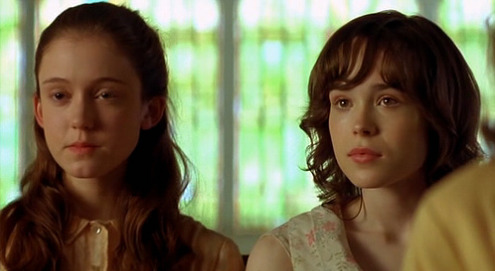
Another reason "Crime" drew the bad kind of notoriety was that it couldn't get a theatrical release, despite starring Ellen Page after her big breakout in "Juno," not to mention indie queen Catherine Keener and other name actors such as James Franco, Bradley Whitford and Michael O'Keefe. I think the film is flawed, but certainly is of sufficient quality to warrant more than the paltry television debut it received.
The final and most insidious reason for the film all but dropping off the face of the earth is the depiction of Gertrude Baniszewski, the caretaker who directed the assault against Sylvia and was responsible for her death. I remember when Bonnie was working on her story, she said something about the movie being sympathetic to "Gertie."
In Indianapolis, saying you're sympathetic to Baniszewski is akin to saying you think Stalin got a bum rap. People say it's wrong to demonize others, but sometimes the bill fits.
"An American Crime" couldn't be called a celebration of Baniszewski, but maybe a feminist defense of her actions. The film goes out of its way to depict her as a victim of abuse by men that she internalized and passed on to the girls under her care.
The depiction is reminiscent of Charlize Theron's portrayal of Aileen Wuornos in "Monster," which also drew accusations of treating a female killer with kid gloves. The unifying theme here is a cycle of abuse that women may perpetuate but not originate.
I do have to say something about the casting of Keener as Gertie. While not a classic Hollywood beauty, Keener is certainly easy on the eyes -- even disheveled and with little or no makeup during most of her screen time. The real Gertrude Baniszewski was one of the most fascinatingly ugly creatures you ever laid your eyes on.
If you Google her image, you'll see that somehow she looked even more frightening when dolled up for her court appearance. Compare that with Keener's put-together look on the stand, and I think it's fair to say a good deal of misplaced Hollywoodization has gone on.
The problem with the filmmakers' approach to such a well-known crime -- O'Haver co-write the script with Irene Turner based on the court transcripts -- is that it's so hard to comprehend such unspeakable acts, the audience can't relate to the people on the screen. The majority of Sylvia's torture at the hands of other children is related in a montage sequence of little power.
By instead focusing more on the character of Baniszewski, the film relegates Sylvia Likens to a cypher with no real identity -- she's simply a vessel for abuse. As depicted by Page, Sylvia is a nice church-going girl who is falsley accused of spreading rumors about Paula, the eldest daughter of the Baniszewski clan. Sylvia and her sister Jenny had been left in Gertie's care by their parents, who were itinerant carnies.
Sylvia never rails against her "punishment," even as it quickly escalates from paddling to burning her arms with cigarettes, and then growing much worse. She's not a person; she becomes a thing that others maltreat. We never understand why she does not protest when accused of doing something of which she is innocent.
"An American Crime" had one notable effect. The house at 3850 East New York Street had lain vacant for most of the time since the Likens murder, but interest renewed when word about the movie got around. Vandalism and break-ins, not exactly isolated given the building's infamy, ramped up. Eventually, authorities saw fit to have it torn down last year.
I don't really know what to call "Cyrus." From the presence of Jonah Hill as the title character, most people will probably take it as a comedy. But the humor is so dark and the mood so frequently unnerving that you don't much feel like laughing.
What I did feel was fully engaged, and enjoyment at drinking in some wonderful performances by Hill, Marisa Tomei and especially John C. Reilly. It's a movie that's not trying to provoke a reaction from the audience, but simply observes a small set of characters with sharp focus and a wry wit.
Reilly plays John, a sad sack who's finally pulled out of the tailspin since his divorce by starting a relationship with Molly (Tomei), a single mother to 21-year-old Cyrus (Hill), who's still living at home and doesn't show any inclinations about changing this fact. Cyrus sabotages their relationship, subtly at first but with increasing venom.
One scene sums up my reaction to this film. John has begun sleeping over at Molly's, which Cyrus accepts with a veneer of friendliness but clearly doesn't like. In the middle of the night, John gets up to find Cyrus standing in the kitchen nude from the waist down and holding a butcher knife. "C'mere," he says with a glazed stare, motioning with the huge knife.
I'll save you the trouble by letting you know "Cyrus" does not veer into slasher flick territory. But the sensation one gets in that moment -- nervous laughter that morphs quickly into fear and then melts into a profound discomfort -- is strangely enjoyable.
"Cyrus" is written and directed by sibling duo Jay and Mark Duplass ("Baghead"), part of the "mumblecore" indie movement. The dialogue has an ungroomed, improvisational feel, and the trio of stars give naturalistic performances without an ounce of ego.
Reilly, who's done a lot of lunkhead comedies lately but has shown serious acting chops in the past, certainly doesn't seem to have any vanity in his role. When we first see John, his ex-wife (Catherine Kenner) catches him masturbating in his slovenly wreck of a home.
She reveals that she and her boyfriend (Matt Walsh) are going to get married, which crushes him despite the seven years since they parted. To cheer him up, they invite John to a party where he gets stupendously drunk, and even the homely girl sitting alone on the couch blows him off.
Molly, however, overhears his moment of total vulnerability and is touched. Soon they're an item, but John quickly senses something wrong about her relationship with her son. Cyrus calls her Molly instead of mother, and they spend hours every day together wrapped in a cocoon of co-dependency.
Cyrus deeply resents any division of Molly's affections with another -- she tellingly reveals she hasn't had a serious relationship since Cyrus was born -- and sets about to use himself as a wedge between them.
In essence, John has walked into the middle of an Oedipal complex, with him taking on the role of the guy about to get whacked.
Hill is terrific, and what's most striking about it is that it isn't all that different from what he does in his comedic roles. He's become a master of the deadpan stare where he says seemingly benevolent things, but in a cutting way. His Cyrus is a sweet-faced emotional terrorist.
I really liked Reilly in this. He starts out as such a pathetic figure, we practically cringe for him. But he slowly gets his baggage together, and has enough self-respect to fight back against Cyrus' manipulations.
Tomei's role is a bit under-realized -- Molly acts as a vessel into which these two flawed men pour their emotions, good and bad. I kept wishing she would take a proactive role, and kick both of them out.
The people we meet in "Please Give" are almost uniformly unpleasant in some way or another. But they hide their meanness behind a veneer of beneficence that is so dear to them, they actually believe they're nice.
Take Kate, more or less the main character, played by Catherine Keener. She's middle-aged, successful, with a husband and teen daughter. Kate literally cannot pass a homeless person on the Manhattan street without giving them money -- her need to be generous is so consuming that on occasion she mistakenly offers cash to regular people minding their own business.
See, Kate is not attached so much to giving as the feeling of superiority she derives from helping total strangers. For her, pity is a like a drug.
Perhaps it's the guilt she feels from the business in which she and her husband Alex (Oliver Platt) are partners. They buy old furniture from the children of old people who have died, and then resell it at a considerable markup as vintage treasures.
They're essentially upscale ambulance chasers, cheating the bereaved who don't know what they've got.
In fact, Alex and Kate have bought the apartment next door to theirs from Andra (Ann Morgan Guilbert), a sour-pussed 91-year-old, with the intention of knocking through the walls to expand whenever the old lady kicks off. They act nice to Andra, offering to make trips to the drugstore for her. But everyone, including Andra, knows they're just counting the days until they can finally have their master suite.
Andra's granddaughters are Rebecca (Rebecca Hall) and Mary (Amanda Peet), who live together in quiet conflict. Mary is a cosmetologist who doesn't believe in hiding her antipathy toward her grandmother, who has the elderly habit of saying incredibly hateful or racist things.
Andra may indeed be a nasty old bitch, but Mary has a few decades' head start.
Rebecca, on the other hand, is sweet to her core, even if she's a bit distant to those around her. Rebecca works as a radiology assistant, spending her days squishing women's boobs into the scanning machine. She shares such intimacy with her patients, Rebecca finds little zeal for it in her own life.
Kate and Alex have a 15-year-old daughter, Abby (Sarah Steele), an awkward kid with a terrible acne problem and a lust for a $235 pair of jeans. Kate's generosity to strangers is galling to Abby, who at one point snatches a $20 bill out of a homeless man's hand, furious that her mother is more giving to a street person than her own daughter.
"Please Give" is written and directed by Nicole Holofcener, who's previously made three other movies with Keener, including "Lovely & Amazing" and "Friends with Money." Like her other works, it's a highly personal film about women and their relationships, their flaws and complexities.
I was thoroughly engaged the entire time I spent with this terrific cast, who deliver sensitive and brave performances. But I kept feeling the movie pushing me away, as if I did not belong inside the circle of people I was observing.
It's hard to say exactly what the film is about. There's an exploration of the New York City mindset, in which people seem to be in a constant, unspoken competition with each other, scrapping for the biggest apartment with the nicest things in it -- and not necessarily even things they like, just stuff that other people will think is nice.
Mostly, though, the unstated theme touches on how even when people offer a hand to others, they're sometimes still being selfish. I just wish "Please Give" could have been a little more generous with itself.
It's rare when the video extras for a major release have disappointed me as much as those for "Where the Wild Things Are."
Usually, I just chalk it up to laziness or complacency on the part of the studio. But in this case, I think the lack of more robust participation by the filmmakers is a real detriment to the video.
This difficult, personal and occasionally brilliant film from director Spike Jonze was much more than a screen translation of Maurice Sendak's seminal 1963 children's book about a boy who goes to live on an island full of (mostly) friendly monsters.
It was a journey guided by the filmmaker behind the fuzzy realities of "Adaptation" and "Being John Malkovich" to explore the inner life of a child. It was not so much a movie for or about children, but an expression of what it's like to be a child, aimed squarely at grown-ups who have forgotten.
A video release of this film cries out for the interaction and participation of the principle creators -- Jonze and his screenwriting partner Dave Eggers. A commentary track would be a treasure of insight as they told us what they were thinking about when they brought Sendak's world to life.
Sadly, none of these are included on either the single-disc DVD or Blu-ray/DVD combo pack.
The DVD's extra features are limited to four Webisodes totalling 13 minutes of video footage from the production. Mostly they're just rambling bits about getting dogs to bark or pranks. The only interesting tidbit is that Jonze had many of the principle crew bring their children to the set so star Max Records would feel like he was in a playground, instead of working for adults.
The Blu-ray version has four more short Webisodes, and a 23-minute film version of another Sendak book, "Higglety Pigglety Pop! Or There Must Be More to Life." It's a delightful combination of puppetry, animation and live action about a dog who runs away from home in order to get experience, taking on a job as a nanny to a crying baby, with a hungry lion waiting in the basement if she fails to get the baby to eat.
Although I appreciated the inclusion of the other film -- directed by the Oscar-nominated team of Chris Lavis and Maciek Szczerbowski -- it doesn't add anything to our experience of "Where the Wild Things Are."
Perhaps Jonze is of the "I let my films speak for themselves" school of thought. That's his choice. But filmmakers who attempt such a bold, personal vision -- and fail to connect with audiences, according to the film's box office tallies -- would do well to offer more of themselves, about why they wanted to make this movie, about the choices they made, and what it means to them.
I, for one, would like to hear Jonze talk about why he decided to abandon the faces of the giant puppets of the monsters created by the Jim Henson workshop in favor of computer-animated ones. How about a comparison of the unadorned puppet heads split-screened with the final version? What about a featurette on envisioning and constructing the monsters' strangely beautiful castle?
These are just a handful of things that could have been, and should have been, included with "Where the Wild Things Are" to allow its fans to revisit, explore it more deeply, and contemplate what the cinematic experience meant to them.